


December 28, 2023
Simplify Timber Cuts
Swing-Blade Sawmills: Redefining Modern Timber Processing
Timber processing has evolved rapidly over the past decade. Across the forestry and sawmilling sector, innovation has become essential—not only to increase productivity, but also to improve safety, accuracy, and operational efficiency.
Among the most significant developments in portable milling has been the rise of the swing-blade sawmill.
Once considered a niche alternative, swing-blade technology has steadily reshaped how timber is processed. By combining mechanical simplicity with cutting versatility, swing-blade systems have reduced complexity, minimised manual handling, and delivered greater control over finished timber production.
As a result, swing-blade sawmills are increasingly being adopted across a wide spectrum of operations—from landowners and custom woodworkers to commercial milling enterprises.
Reduced Log Handling and Improved Yield
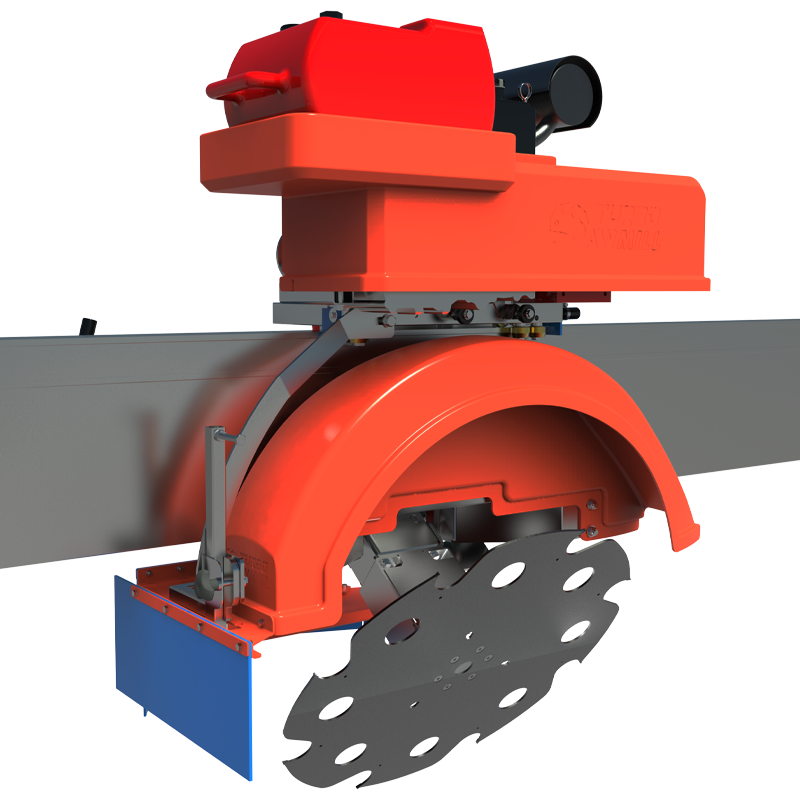
A defining characteristic of swing-blade sawmills is their ability to pivot the circular blade through 90 degrees, enabling both vertical and horizontal cuts without repositioning the log.
This capability fundamentally changes the milling workflow.
Traditional band mills often require logs to be rotated, repositioned, or heavily manipulated to achieve dimensional cuts. Swing-blade systems, by contrast, allow operators to work directly within the log’s natural geometry.
The outcome is twofold:
- Reduced physical handling of heavy logs
- Improved timber recovery and reduced waste
By minimizing log movement, swing-blade mills not only increase efficiency but also enhance workplace safety and reduce reliance on heavy equipment.
Operational Simplicity
Another key advantage of swing-blade technology lies in its mechanical and operational simplicity.
Unlike many band mills, which can require extensive setup, frequent blade changes, and precise tensioning, swing-blade systems are typically intuitive to operate. Basic training is often sufficient for operators to achieve accurate, repeatable results.
The cutting process itself is straightforward. Operators can transition between vertical and horizontal cuts without complex adjustments, allowing for faster workflow and fewer interruptions.
For many operators, this simplicity translates directly into higher productivity and lower operating costs.
Maximizing Timber Recovery
Swing-blade sawmills offer a flexible approach to cutting that adapts to the log rather than forcing the log to fit a fixed cutting pattern.
This adaptability is particularly valuable when processing irregular, stressed, or oversized logs—situations where traditional systems often generate excessive waste or require compromise in cut quality.
By maintaining continuous cutting paths and minimizing repositioning, swing-blade mills extract more usable timber from each log, even in challenging conditions.
Versatility in Cutting Methods
The ability to cut in multiple planes makes swing-blade sawmills uniquely versatile.
From slabbing and quarter sawing to structural timber production and custom dimensions, swing-blade systems can accommodate a broad range of cutting requirements within a single platform.
This versatility reduces the need for multiple machines or secondary processing stages, enabling operators to respond quickly to diverse project demands.
On-Site Processing and Portability
Portability has long been a defining feature of swing-blade sawmills, but its significance has grown as logistics costs and environmental considerations have increased.
By bringing the mill directly to the log, operators can:
- Reduce transportation costs
- Minimize environmental impact
- Process timber in remote or difficult terrain
Swing-blade systems are particularly effective in locations where traditional fixed-site sawmills are impractical or uneconomical.
Streamlined Timber Production
Swing-blade sawmills enable operators to produce finished or near-finished timber directly at the primary processing stage.
By reducing reliance on secondary planing or re-sawing, these systems simplify production workflows and reduce labour intensity.
For many operations, this integrated approach represents a fundamental shift—from multi-stage processing to a more direct, efficient model of timber production.
A Technology Shaping the Future of Sawmilling
Swing-blade sawmills are no longer an alternative technology; they are becoming a central part of modern timber processing.
Their combination of efficiency, adaptability, and mechanical simplicity aligns closely with the evolving needs of the industry—particularly as demand grows for flexible, cost-effective, and sustainable milling solutions.
As timber processing continues to evolve, swing-blade technology is likely to play an increasingly prominent role in shaping the future of the sector.
Explore the Turbosawmill Range
For operators seeking to simplify workflows and expand cutting capability, swing-blade sawmills offer a compelling path forward.
Discover the Turbosawmill range of portable swing-blade sawmills and see how modern swing-blade design can transform timber processing.
FAQs
Q. How do swing-blade sawmills simplify log positioning?
A. The swing-blade sawmill’s blade movement eliminates the need for frequent log repositioning. Operators can simply feed the log and let the swing-blade sawmill pivot as needed.
Q. Can swing-blade sawmills handle irregularly shaped logs effectively?
A. Yes, the swing-blade design allows for efficient cutting of logs with irregular shapes. Rugged logs are no match to a swing-blade sawmill.
Q. Do swing-blade sawmills require a lot of maintenance?
A. Turbosawmill swing-blade sawmills are designed with durability and ease of maintenance in mind. Regular maintenance is straightforward. You can buy parts from us at Turbosawmill.
Q. Are swing-blade sawmills suitable for beginners in the sawmilling industry?
A. Yes, their intuitive design and ease of operation make swing-blade sawmills accessible to operators of varying experience levels, including those new to sawmilling.
PRICE YOUR SAWMILL
need pricing?
click the link below
Select your mill with accessories, delivery and training.