
Field notes / Tauranga, NZ
Milling a giant redwood
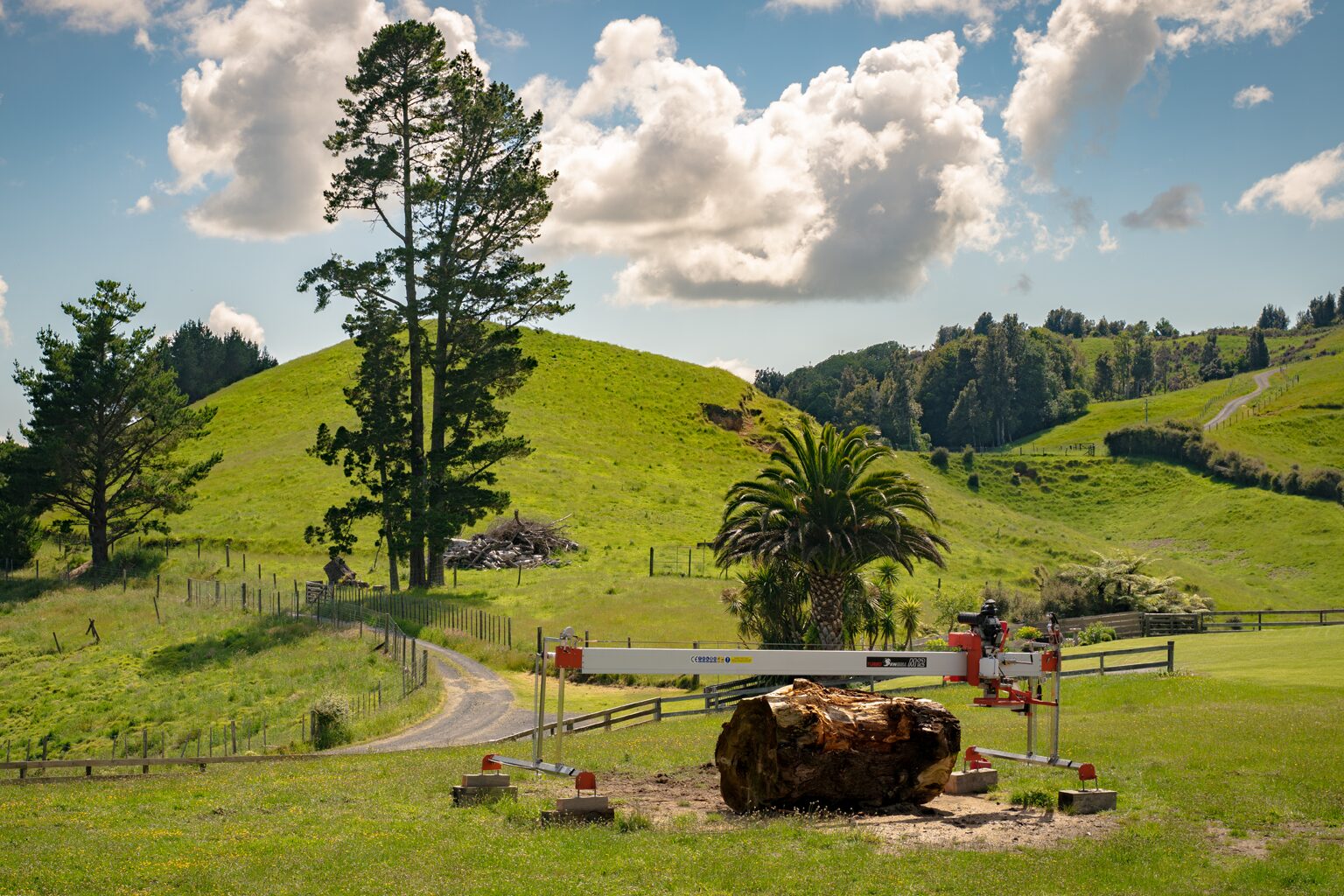
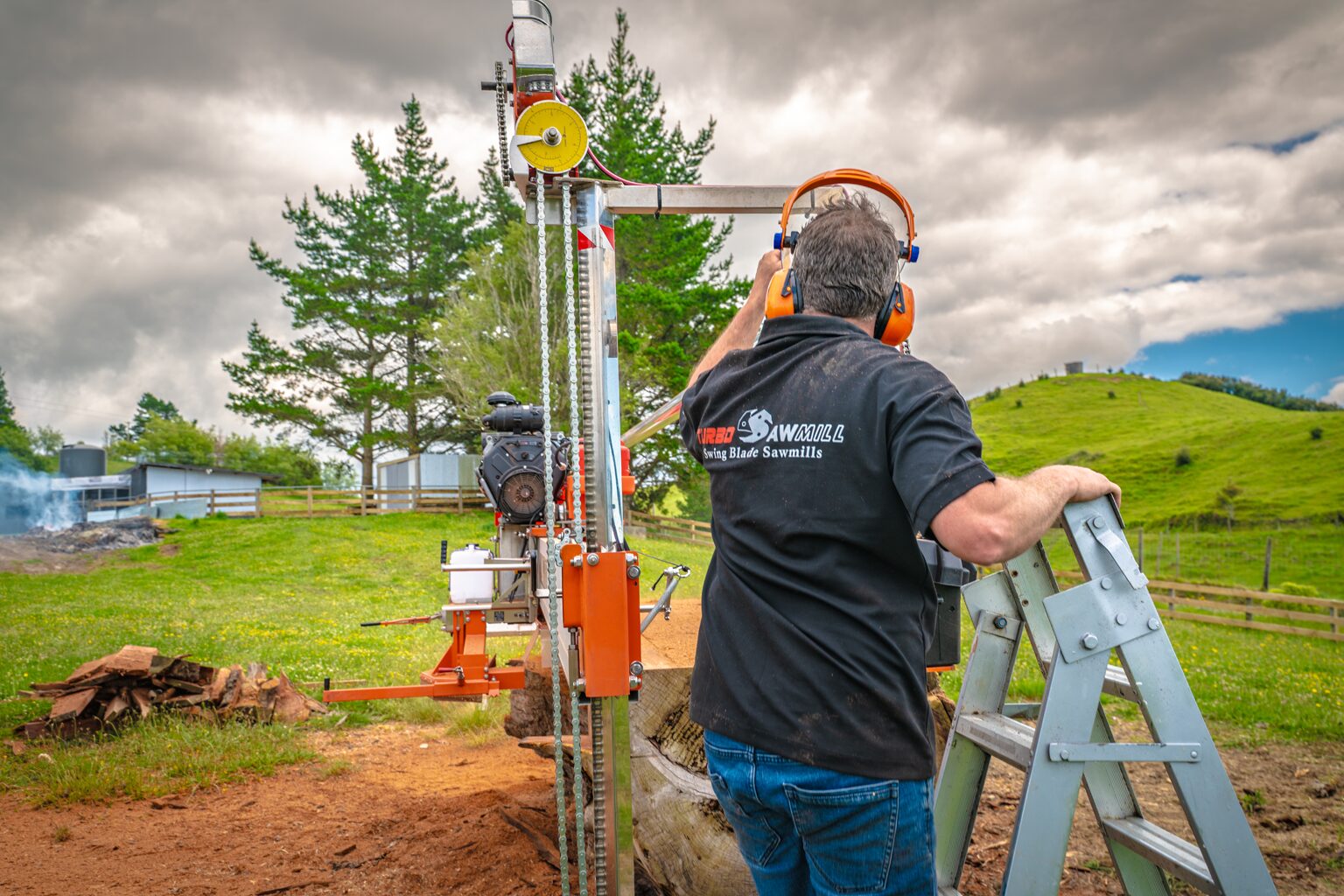
We put the M12 over the biggest log in our paddock for a customer visiting from Fiji. There was a hole in the heart of that redwood, and enough good wood around it to start pulling out 12-by-2s.
Jake Peterson · TurboSawmill, New Zealand

Full film coming soon4K landscape · Approx. 17 min
The M12 giant frame over our New Zealand redwood.Watch the two YouTube Shorts ↓
The Fiji visit
What do you take out of a log like this?
Our visitor had already bought his first mill. His plan is to mill a mix of log sizes in Fiji, bid for government contracts at home and supply timber to customers in the United States. With another two mills under consideration, he flew to New Zealand to see us cutting in person.
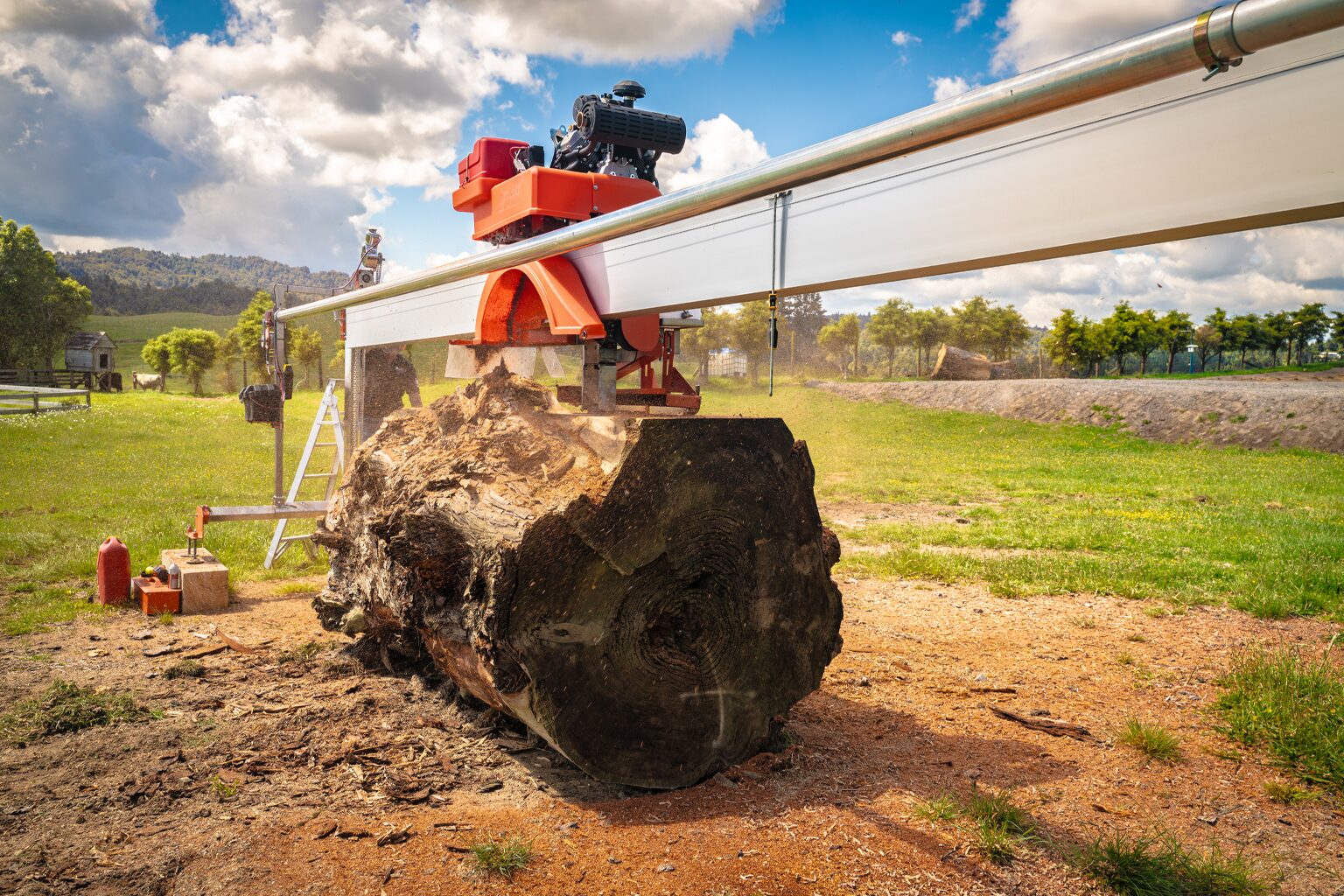
The end of this redwood made the choice of cut fairly easy. The centre was partly rotten. Around it was a deep band of sound timber. We could set out a 12-inch-wide, 2-inch-thick board in that outer wood, then choose a larger block wherever the next face gave us room.
He was delighted with what he saw. And for anyone who couldn’t be there, that end view is a good place to start. Follow the timber around the hole.
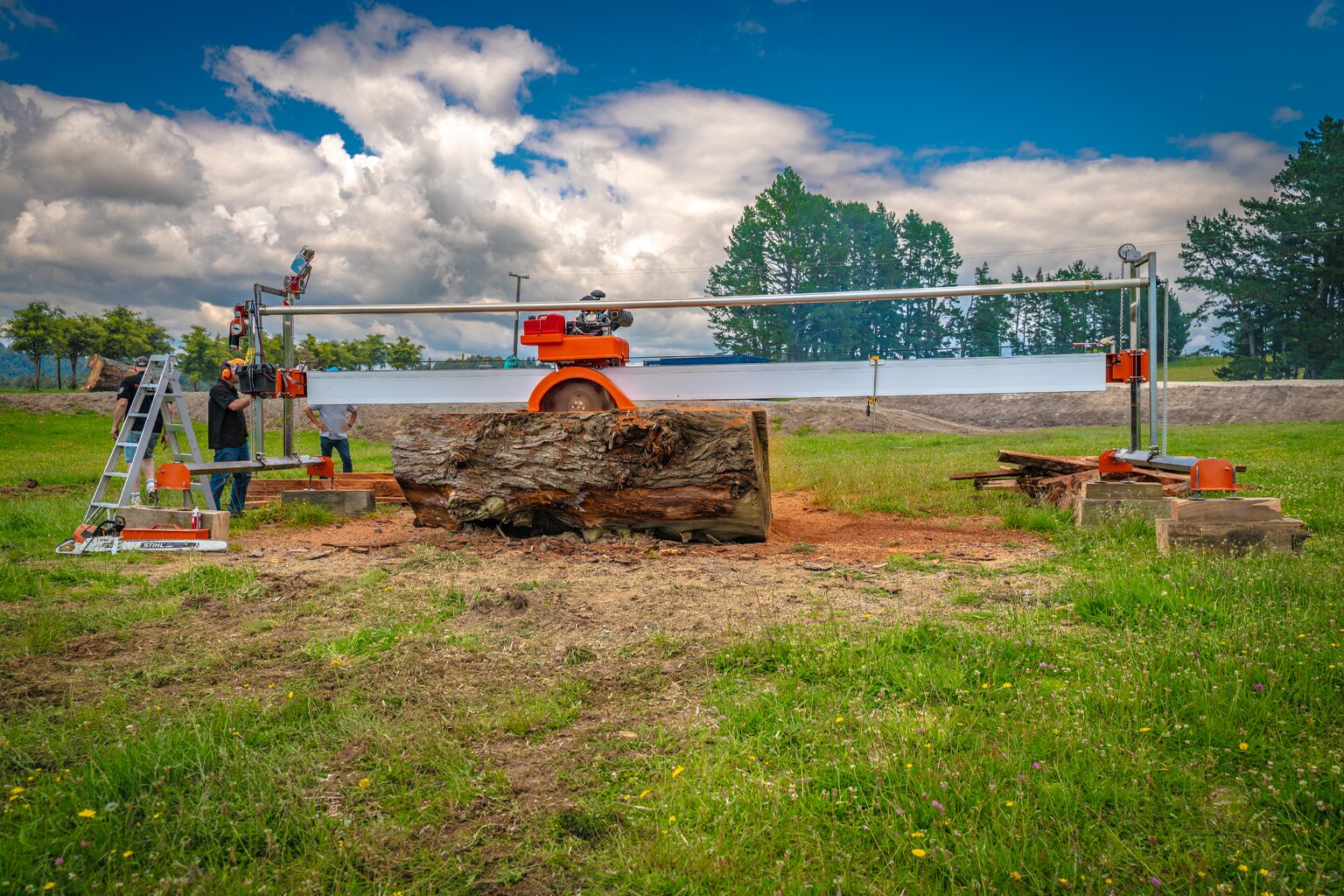
The giant frame
One end to operate.
An open side for the timber.
On many portable bandsaws, the log has to fit through the sawhead opening. On the M12, the carriage travels along a single beam and the swing blade takes a board at a time from the exposed face. The 12-inch cut sets the size of a board. The log itself can be many times wider. The operator can stay at one end while the cut travels the length of the trunk.
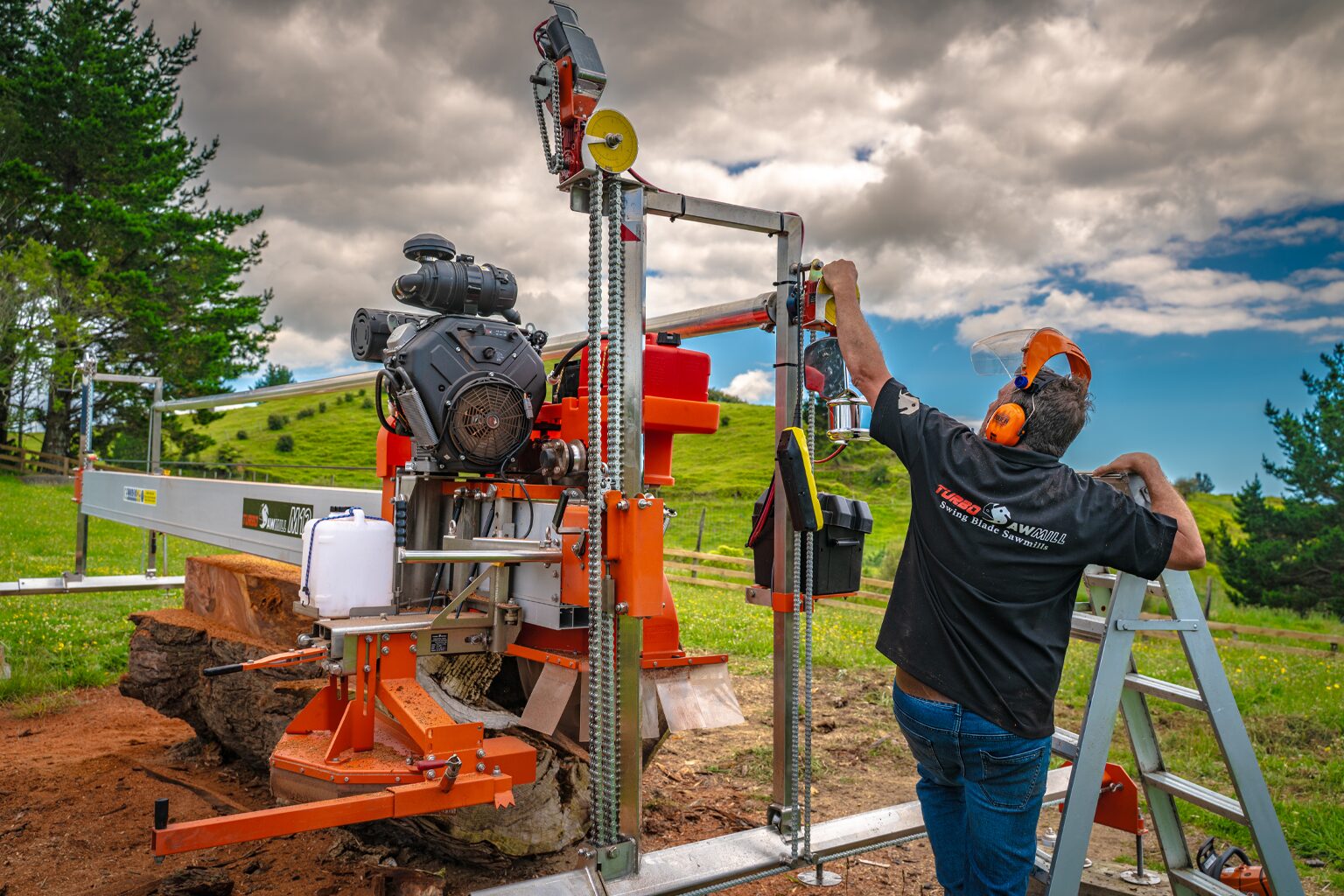
Set the board size
We fitted the optional push-button sizing kit for the demo. Height and sideways adjustments are both made at the operator end. From there we could work down through the log, board by board, towards the bark underneath.
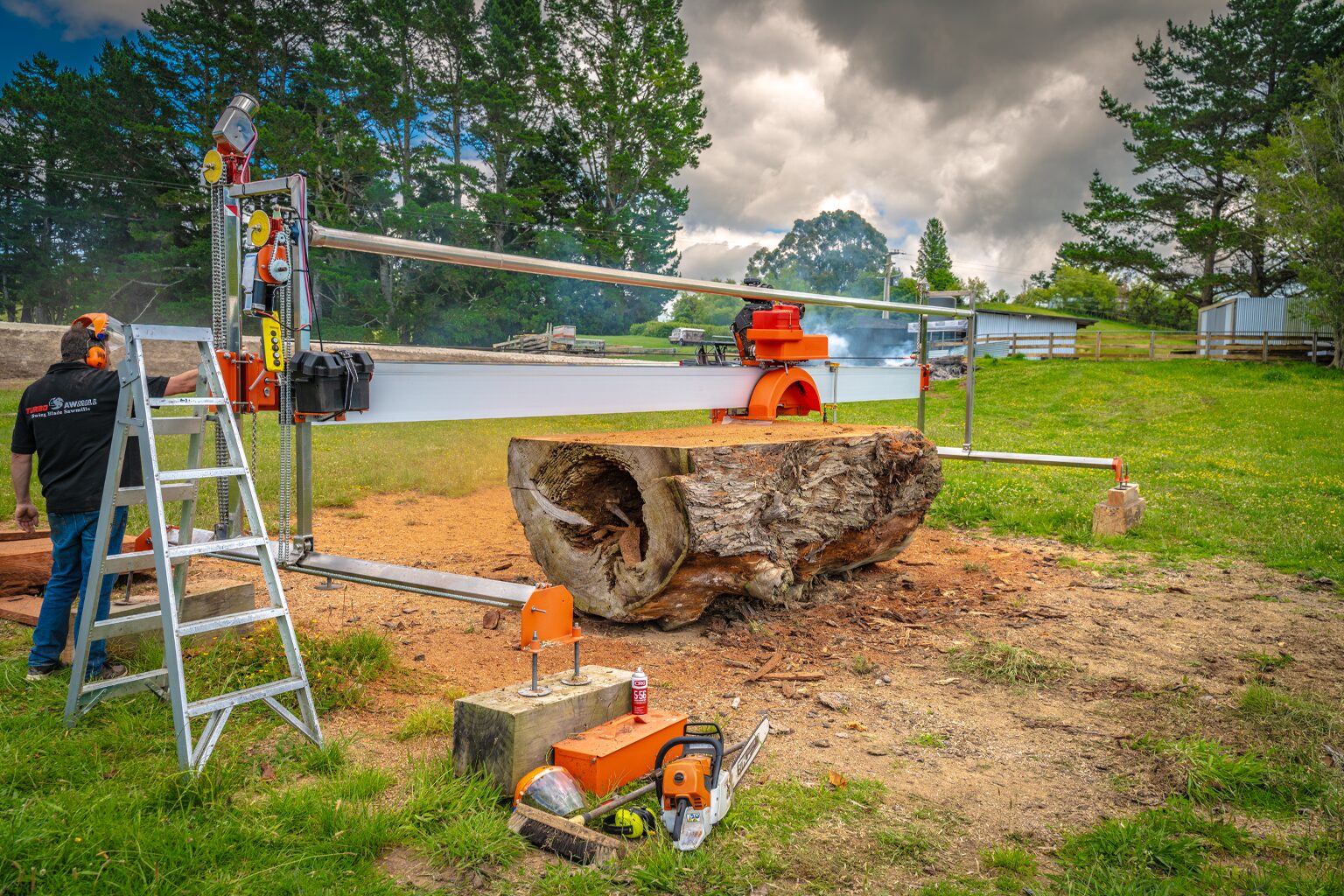
Let the blade swing
At the operator end, swinging the blade horizontal loads a gas strut. When the carriage reaches the far end, a stop releases the mechanism and the blade swings upright for the return cut. That saves a walk to the far end on every board.
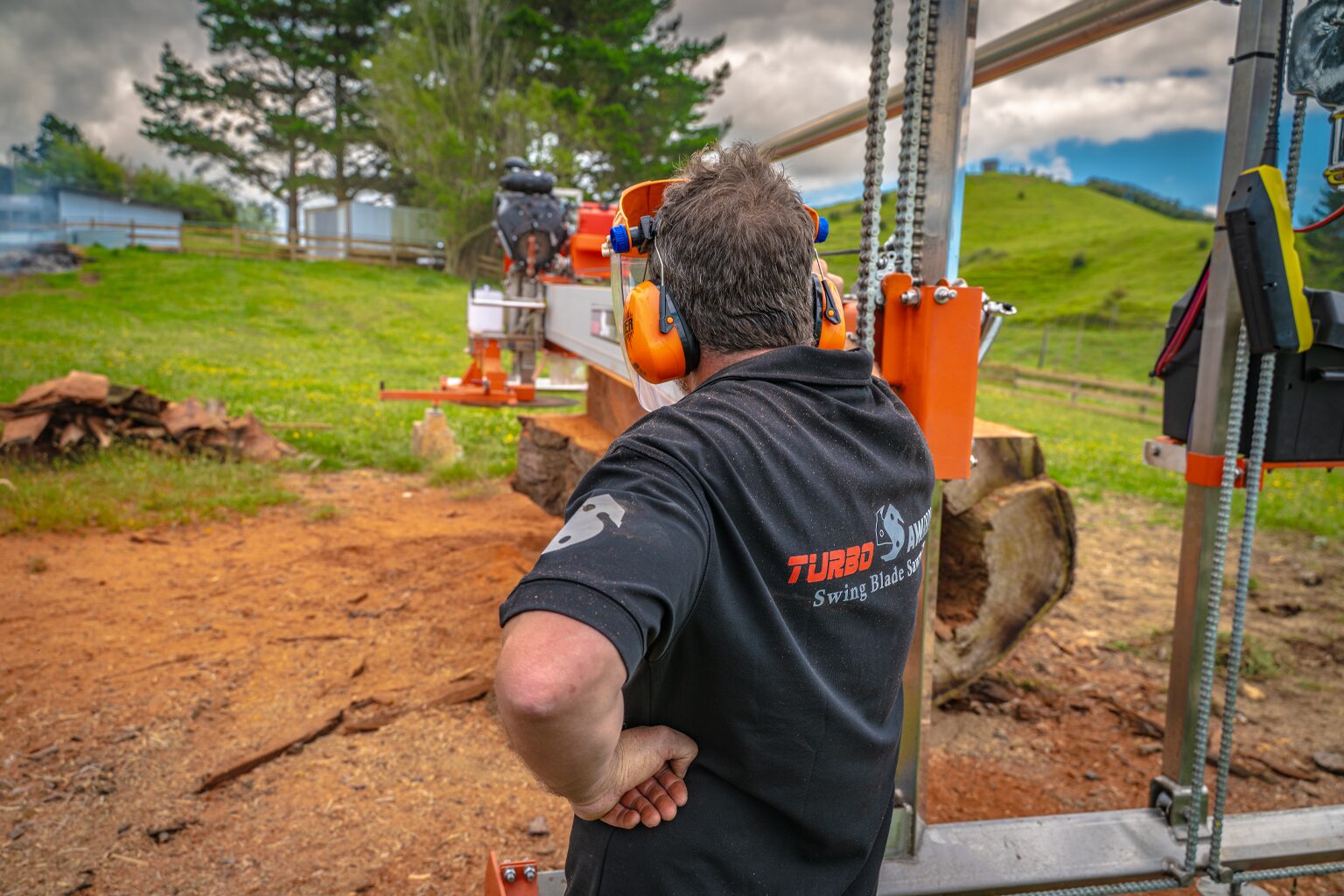
Feed by feel
One lever controls the hydrostatic drive in both directions. We can ease the carriage right back to a crawl in a deep vertical cut, then pick up speed when the cut is shallow. The operator feels the difference and sets the pace.
From log to stack
Twelve inches wide.
Two inches thick.
We ran a weld-on blade through this redwood. It cut like butter. The narrower kerf means less of each cut ends up as sawdust. An insert-tooth blade works well in softer timbers too. Its teeth cut a wider slot, and in soft wood we find it needs less water on the blade.
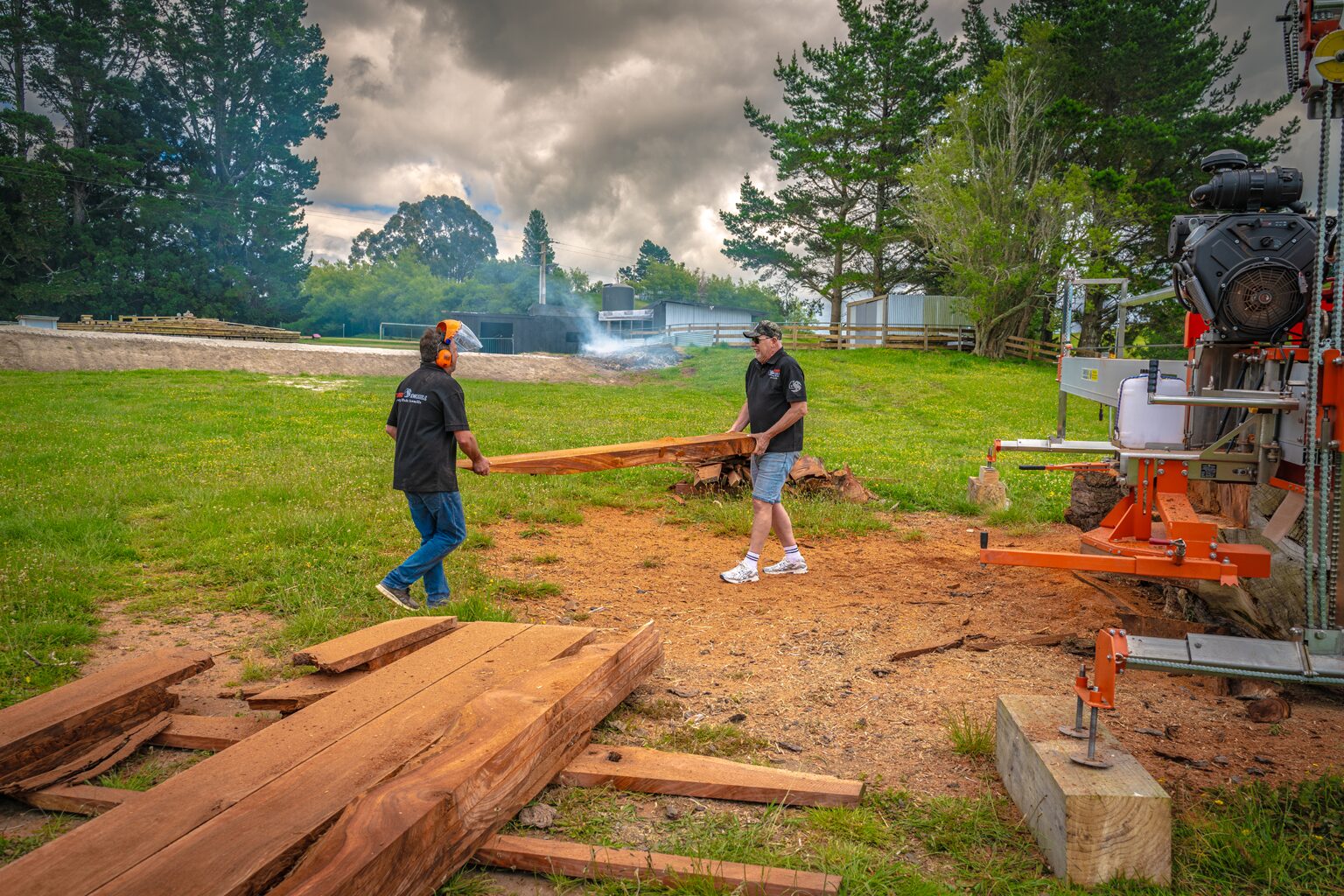
On a wide horizontal board we prefer to send the carriage down, bring it back, then make the finishing cut. Done in stages, the weight of the board is easier to manage and there’s less heat building in the blade.
Once the board comes free, the open side is where the design earns its keep. The boards and larger beams can slide straight off the log. Nobody has to walk along the top of that redwood to mill it down.
YouTube Shorts
Two views from the paddock
The wide shot shows how the mill fits over the trunk. Get closer to the cut and you can see how little of that enormous log the blade needs to engage to make the next board.
 M12 – Making Giants Look Easy ↗
 All the Way from Fiji to See the M12 in Action! ↗


The optional attachment slabber
Keep the live edge.
Up to 1.5 metres wide.
Sometimes the piece worth keeping is the whole width of the tree. For a live-edge tabletop or a broad counter, the M12 takes a bolt-on slabbing kit. The circular blade comes off and the attachment frame, long bar and ripping chain fit to the same carriage.
The chain cuts lengthways through the log like a very wide chainsaw. You stay at the operator end and turn a hand winch to draw it through. The result can be a single slab up to 1.5 m (about 5 ft) wide, with the natural edges running its length.

Smaller logs on the M12
When the next log is a little one
Big logs show off the open frame, but a small stem goes through just as simply. Set the first face, choose the board size and run the carriage from the same end. There are fewer boards across the face, and the hydrostatic feed lets you move along briskly in a light cut.
California’s redwood coast
Why a California sawyer would recognise this log
Coast redwoods grow along the Pacific from California into southern Oregon. Summer fog helps sustain them. The US National Park Service describes a coast redwood 22 feet across at chest height. The giant sequoia is a different tree, native to groves on the western slopes of the Sierra Nevada.
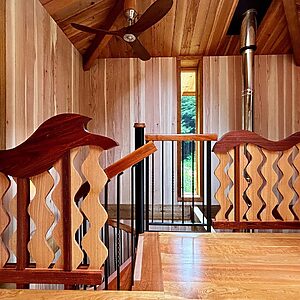
For someone with a big redwood already on the ground, the practical question is the one we faced in Tauranga. Where is the good wood, and how do you get it out? In Northern California, TurboSawmill owner David Groth has used his M10 Auto to turn his own redwood into buildings and replacement decking. That’s what a stack of boards like this can become.