
TURBOSAWMILL
Family stories / News ↗A life of invention. A family legacy.
RememberingCarlPetersonThe man behind the legend.
—
A father, inventor, writer and storyteller. A pioneer of the portable swing-blade sawmill. Remembered for the ideas he brought to life, and for the depth, warmth and spirit of the man himself.
01 / Remembering Dad
An inventive mind.
A soulful man.
To people who encountered his machines, Carl Peterson was a sawmill pioneer. To me, he was Dad. Those two parts of his life belong together: the curiosity that drove his work was also part of the person we knew and loved.
Dad could become completely absorbed in an idea. He wanted to understand things for himself, question what others took for granted, and see whether a problem could be solved more simply. He had the patience to keep thinking, and the determination to turn that thinking into something you could put to work.
But his curiosity reached far beyond machinery. He was a writer and storyteller, a deeply thoughtful man drawn to questions of meaning, spirituality and the world beyond the material. He could be intensely focused, yet warm, down to earth and easy to like.
His partner, his children, his grandchildren and the people close to him knew a life larger than any invention. In remembering Dad, we want to keep that whole person in view.
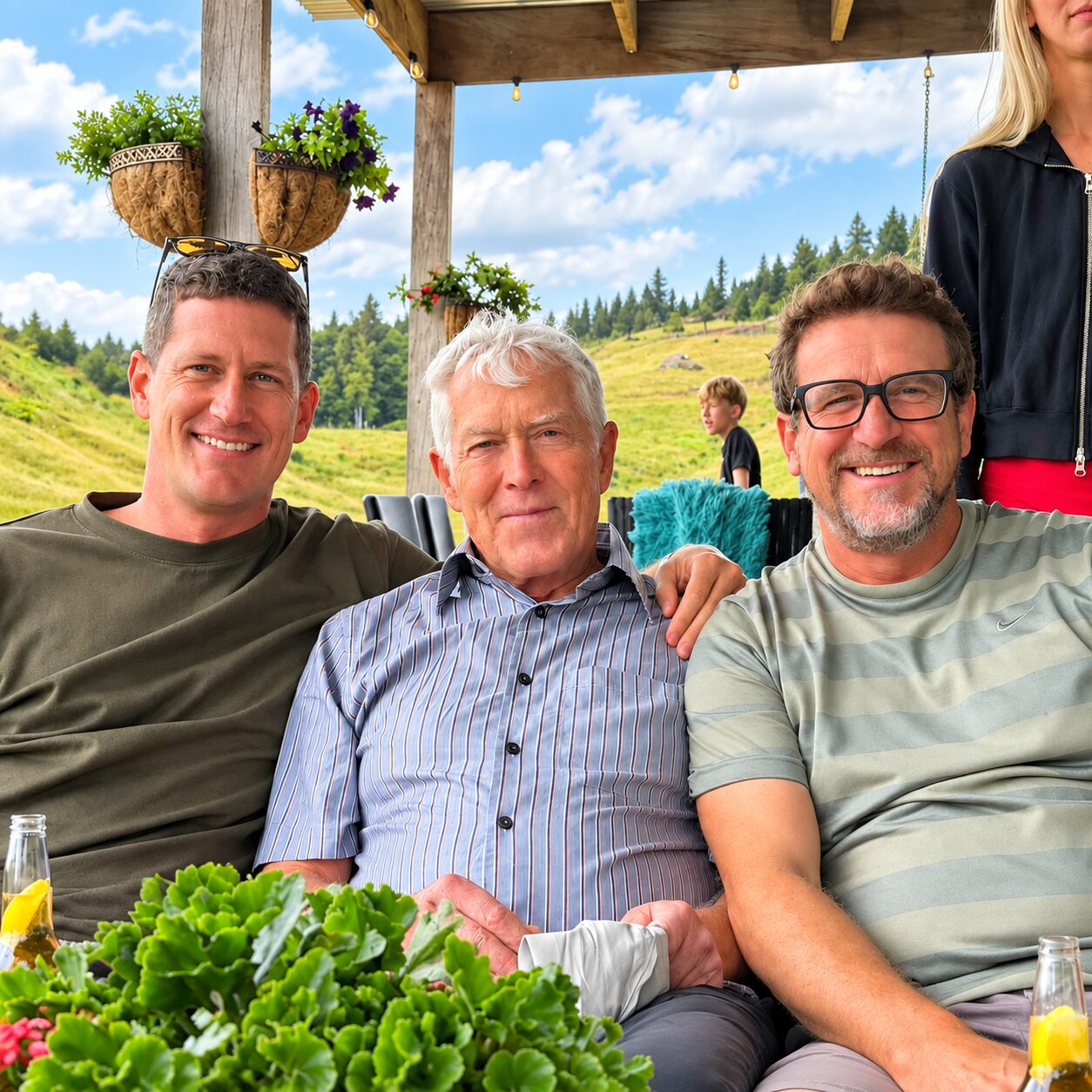
The person we remember
His ideas travelled.
His presence stayed with us.
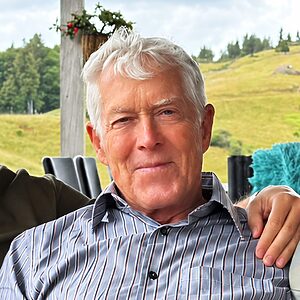
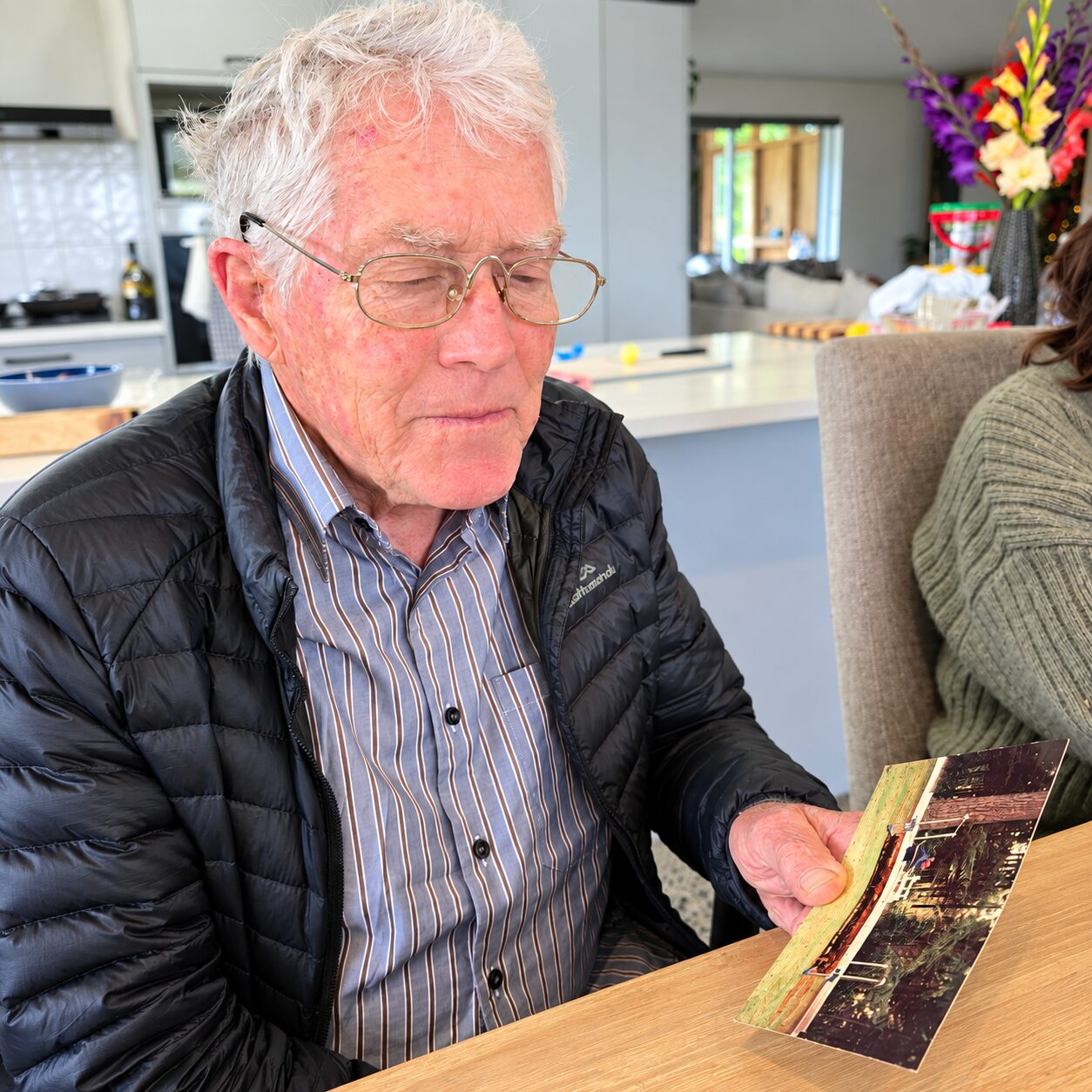
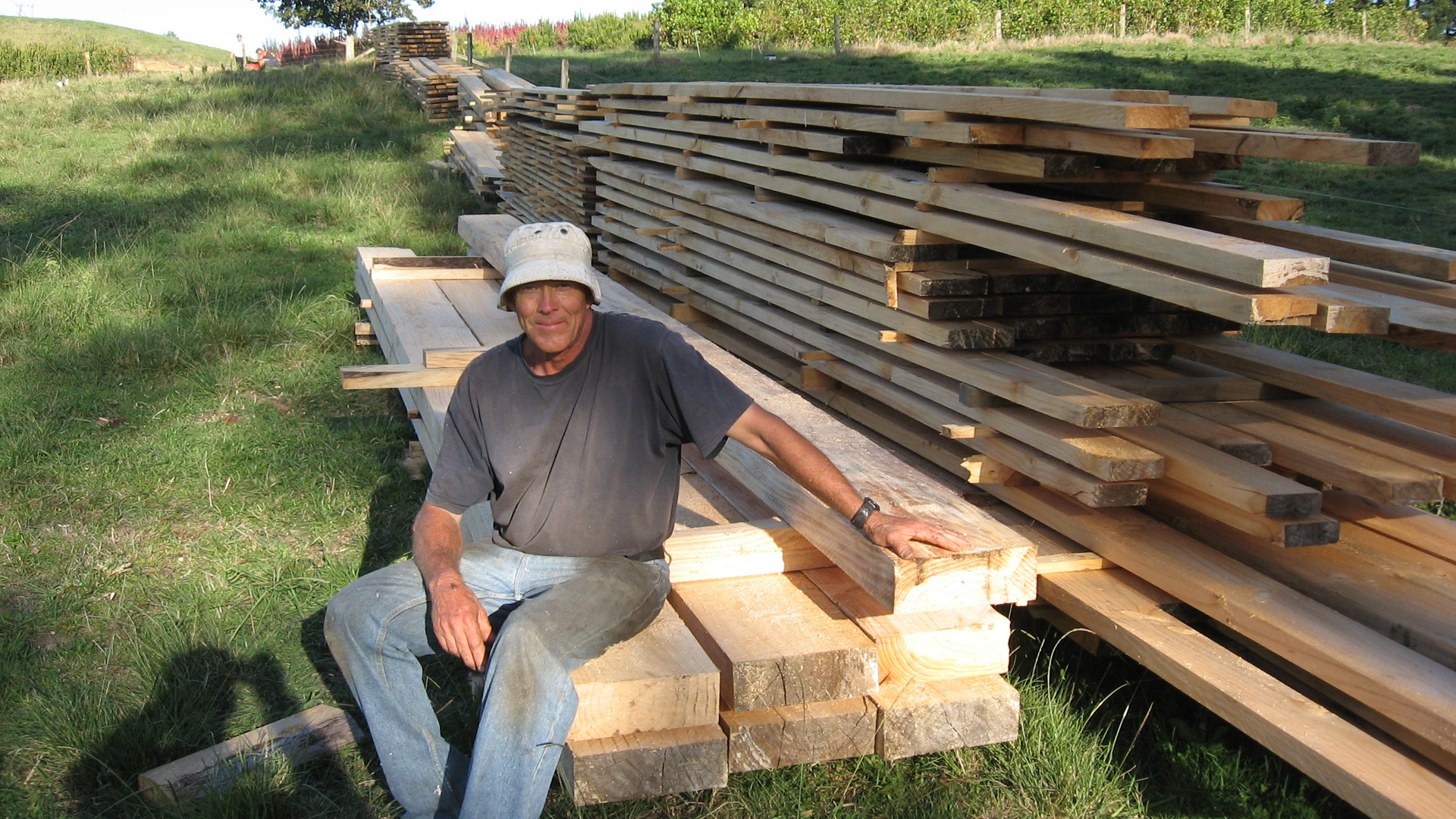
There is a particular kind of memory held in an ordinary photograph: Dad studying an old picture, sitting beside his sons, or pausing alongside a stack of timber. These are the moments that give the story its heart.
The machines explain part of his life. His humour, sincerity, insight and connection with others explain why he mattered so much to the people around him. That is the Carl we want this memorial to preserve.
02 / In his own words
Still here.
In his own voice.
Recorded only a month or two before his passing, this conversation preserves Carl recalling his earliest mill and the adventures around it. Hearing him tell it is a treasured part of our family archive.
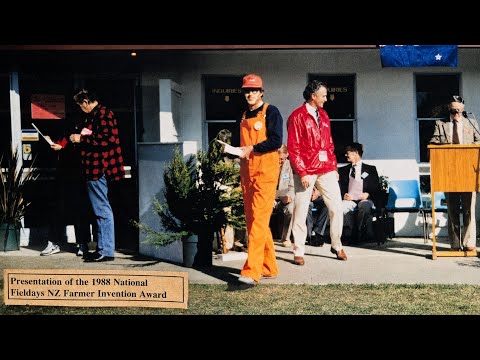
Personal recollections / Looking back to 1988
Carl remembers the beginning
Carl’s own account of his early swing-blade sawmill. The year in the original video title refers to that early history, not the recording date.
Watch on YouTube ↗03 / From necessity to invention
It began with
a practical need.
In Fiji, Dad needed a way to turn logs into useful timber. His early experiment paired chainsaw power with a circular blade; horizontal and vertical cuts initially required repositioning the assembly by hand.
The upheaval of 1987 brought our family to New Zealand. Starting again in Rotorua, he developed a swinging mechanism and built with the materials he could find. Agricultural demonstrations helped turn that resourcefulness into a commercial sawmill business.
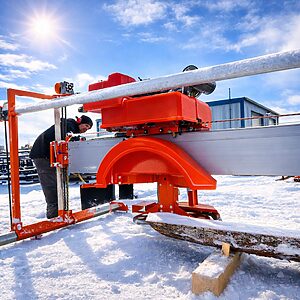
His portable swing-blade design helped change how people worked with timber. Operators could take a mill to a log and cut boards with a blade that changed between horizontal and vertical positions. It was a practical idea with far-reaching consequences.
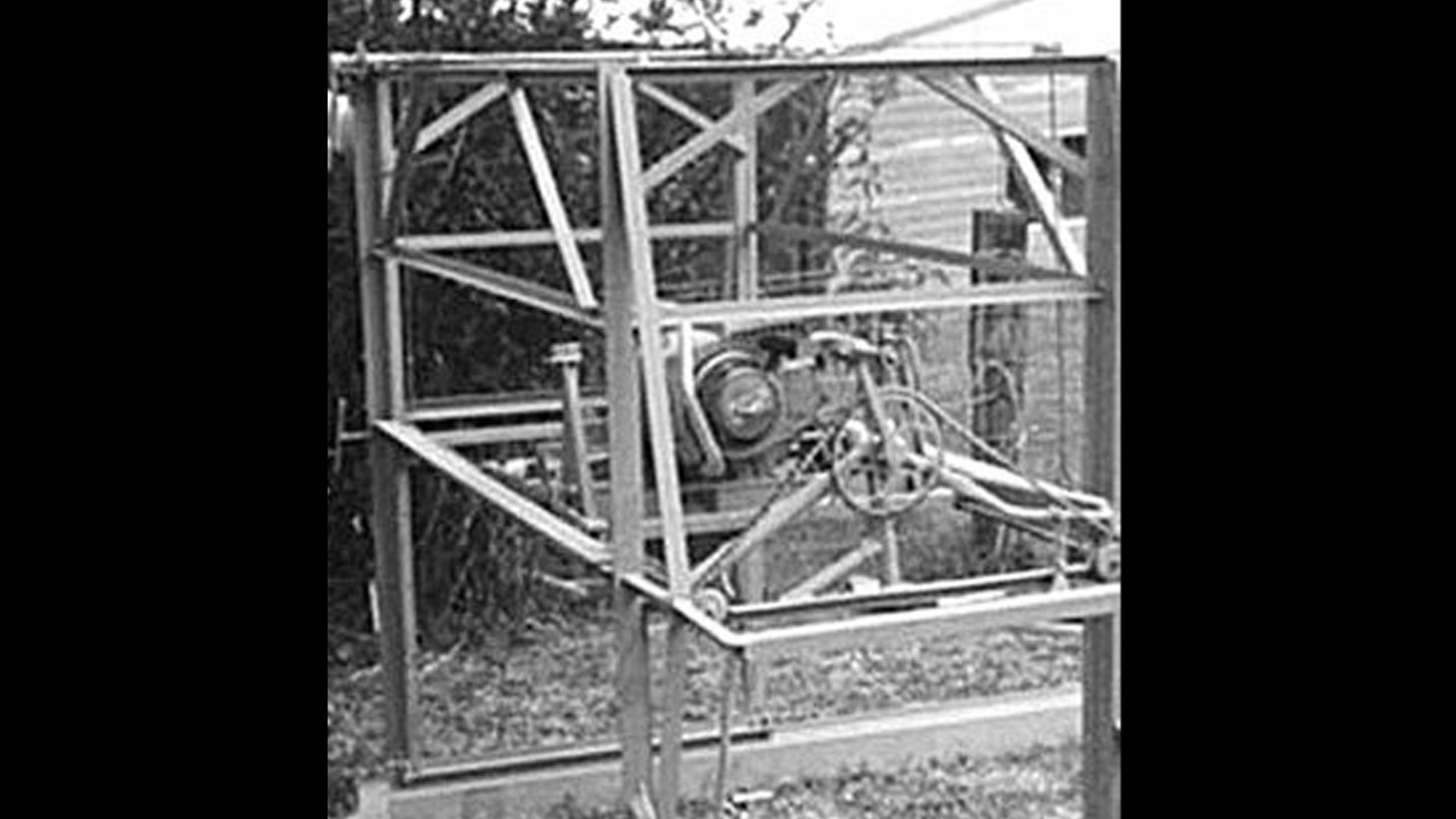
A few turning points
A life that kept
moving forward.
- Fiji
Necessity starts the experiment
A need for timber prompts Carl’s earliest milling ideas.
A new beginning in Rotorua
After leaving Fiji, the family rebuilds its life in New Zealand.
- Late 1980s
An idea becomes a business
Demonstrations and commercial development bring his portable swing-blade sawmill to a wider audience.
- 2000s
Father and son build together
Jake develops automation; Carl supports the work. Their partnership leads to Turbosawmill.
His memories, in his own voice
A late-life recording preserves Carl’s recollections for the family and future sawmillers.
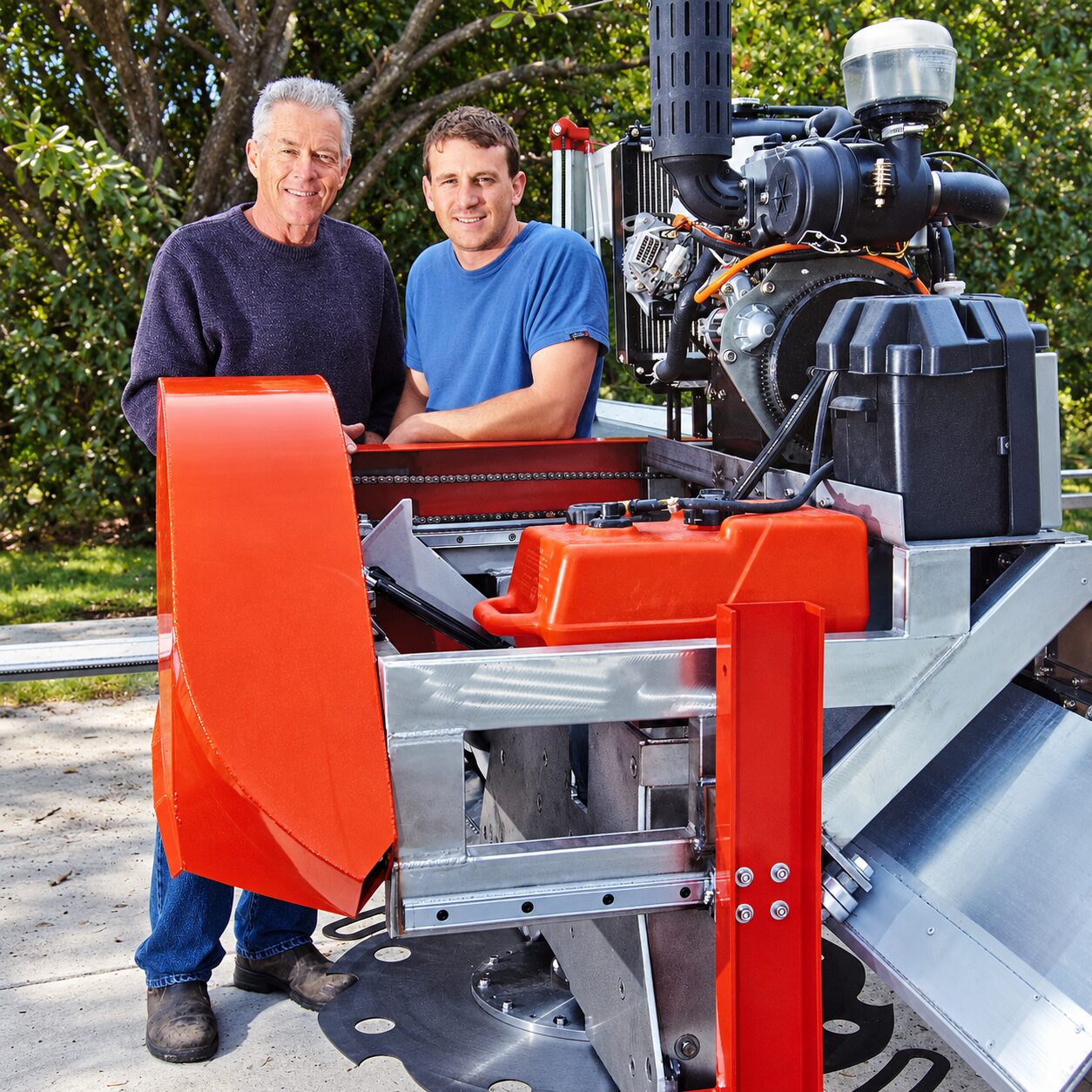
04 / Building together
A father’s belief.
A shared direction.
I learned in Dad’s workshop, beginning with the everyday jobs and working my way into welding, assembly and design. When I became absorbed in automation, he backed the development.
Later, we began a new chapter together: Turbosawmill. Our work explored open access around the log, a monorail layout and simpler automation. The films below preserve the experiments as well as the machines that followed.
That support is part of what I remember most. Dad understood the pull of an unfinished idea. Having him beside me meant that a difficult problem could become a conversation, a trial, and another attempt.
His contribution remains in our approach: look carefully, question the complication, and keep working towards something useful.
The work behind the ideas
Out in the timber.
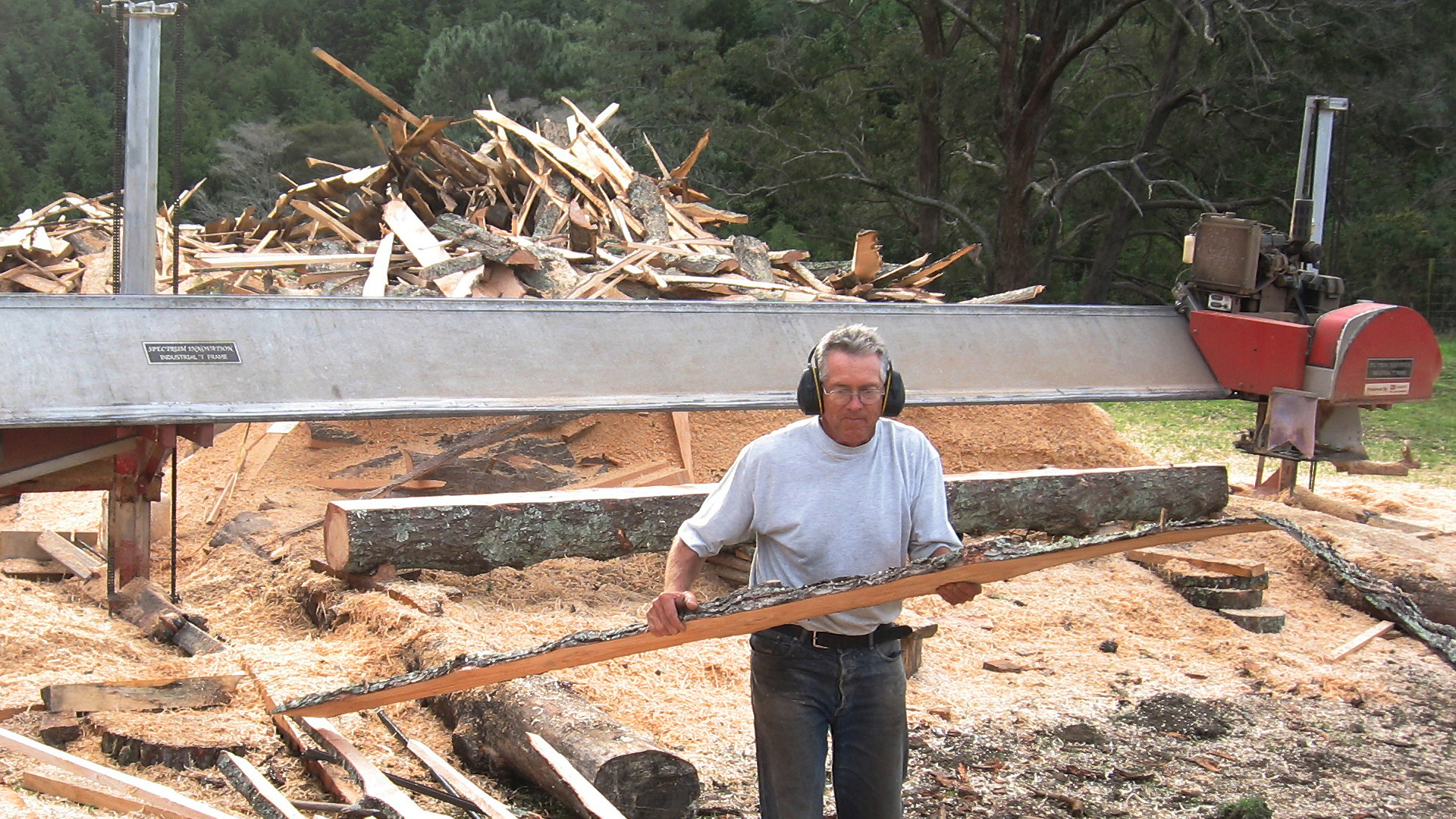
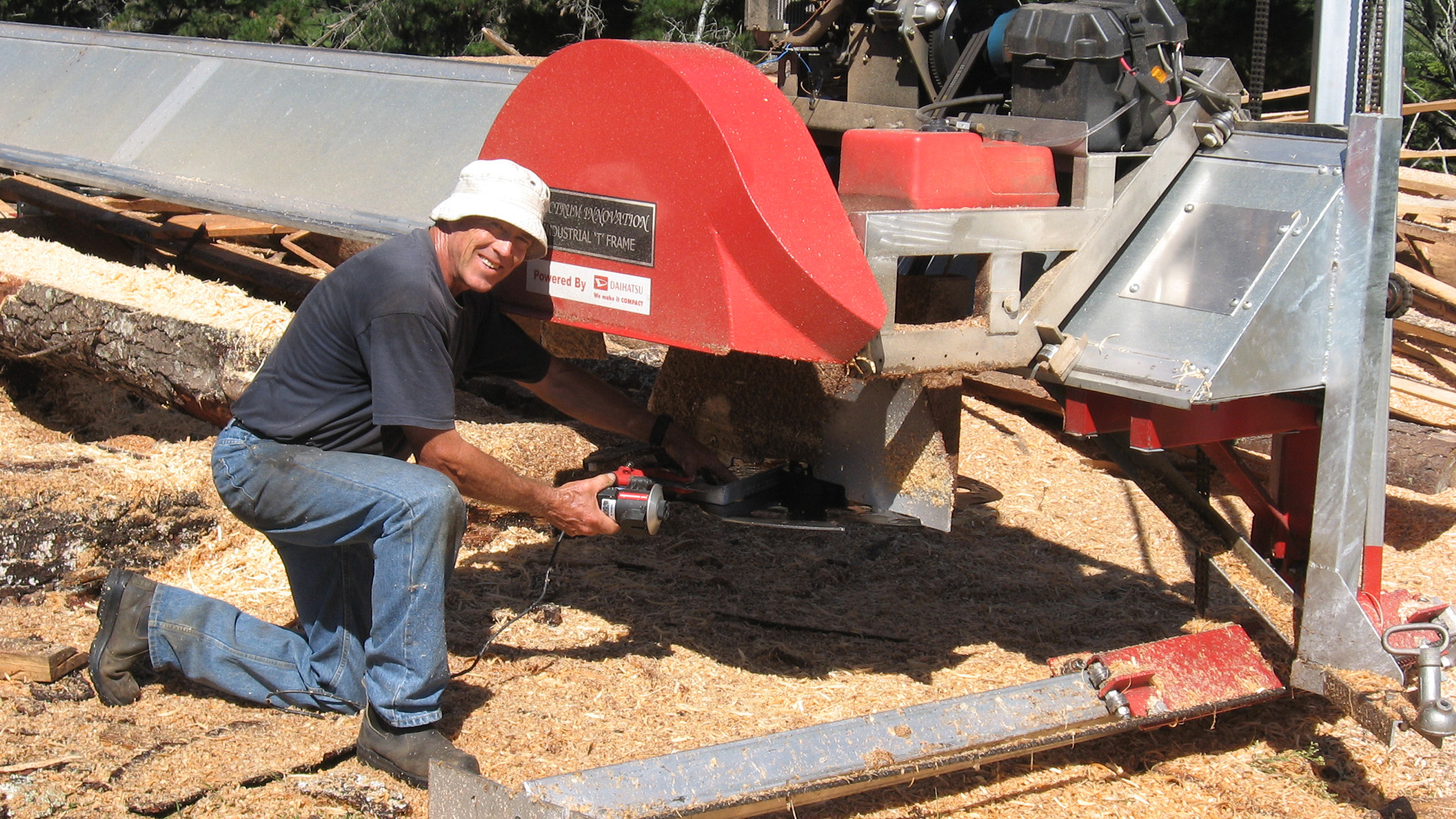
The archive follows Carl into the milling day: working at the machine, maintaining the blade and seeing the timber his ideas could produce.
05 / The photograph archive
The history.
Held in pictures.
Early designs, newspaper clippings, recognition and another generation learning the work. Select any photograph to enlarge it, then move through the archive.
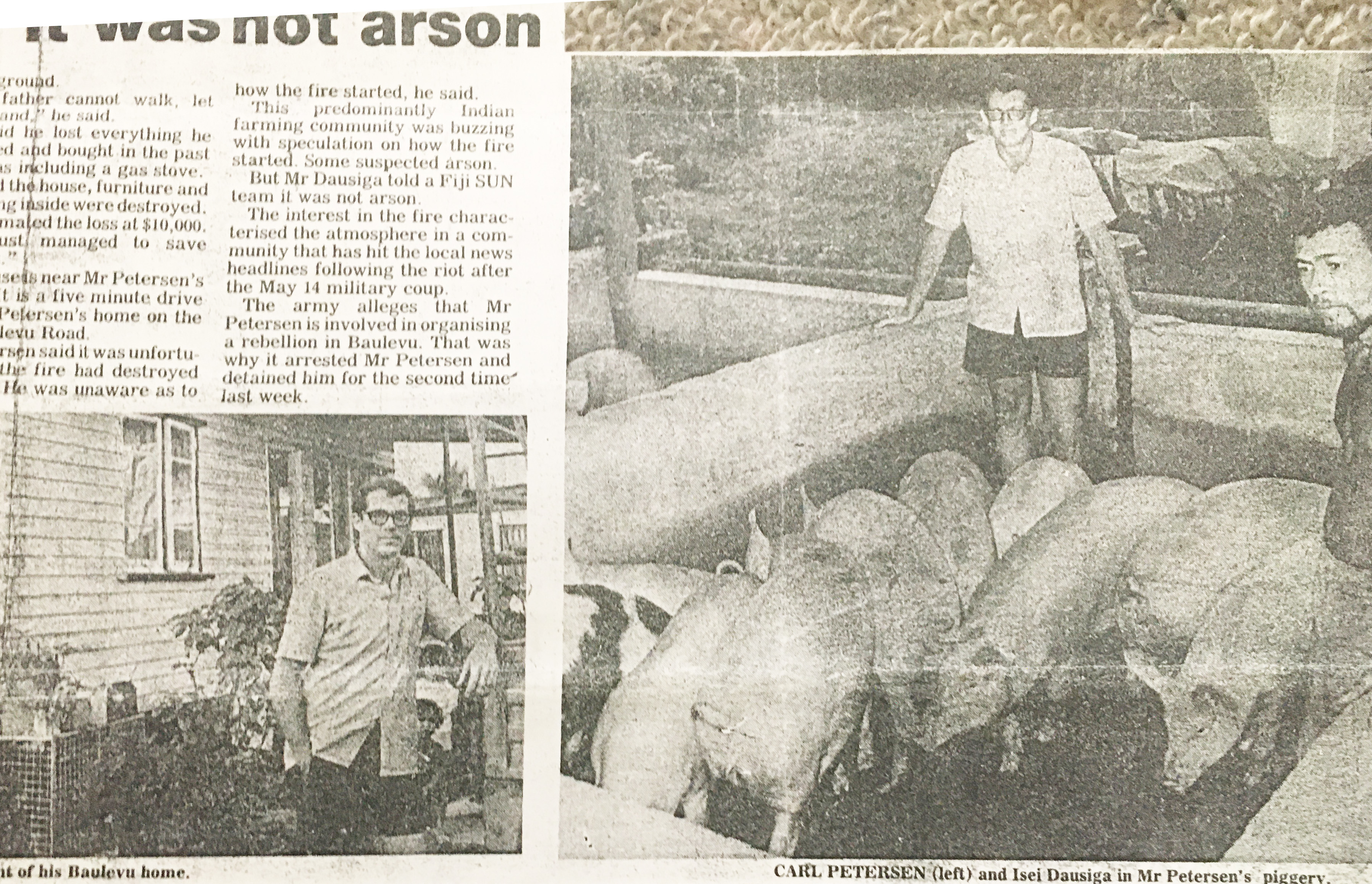
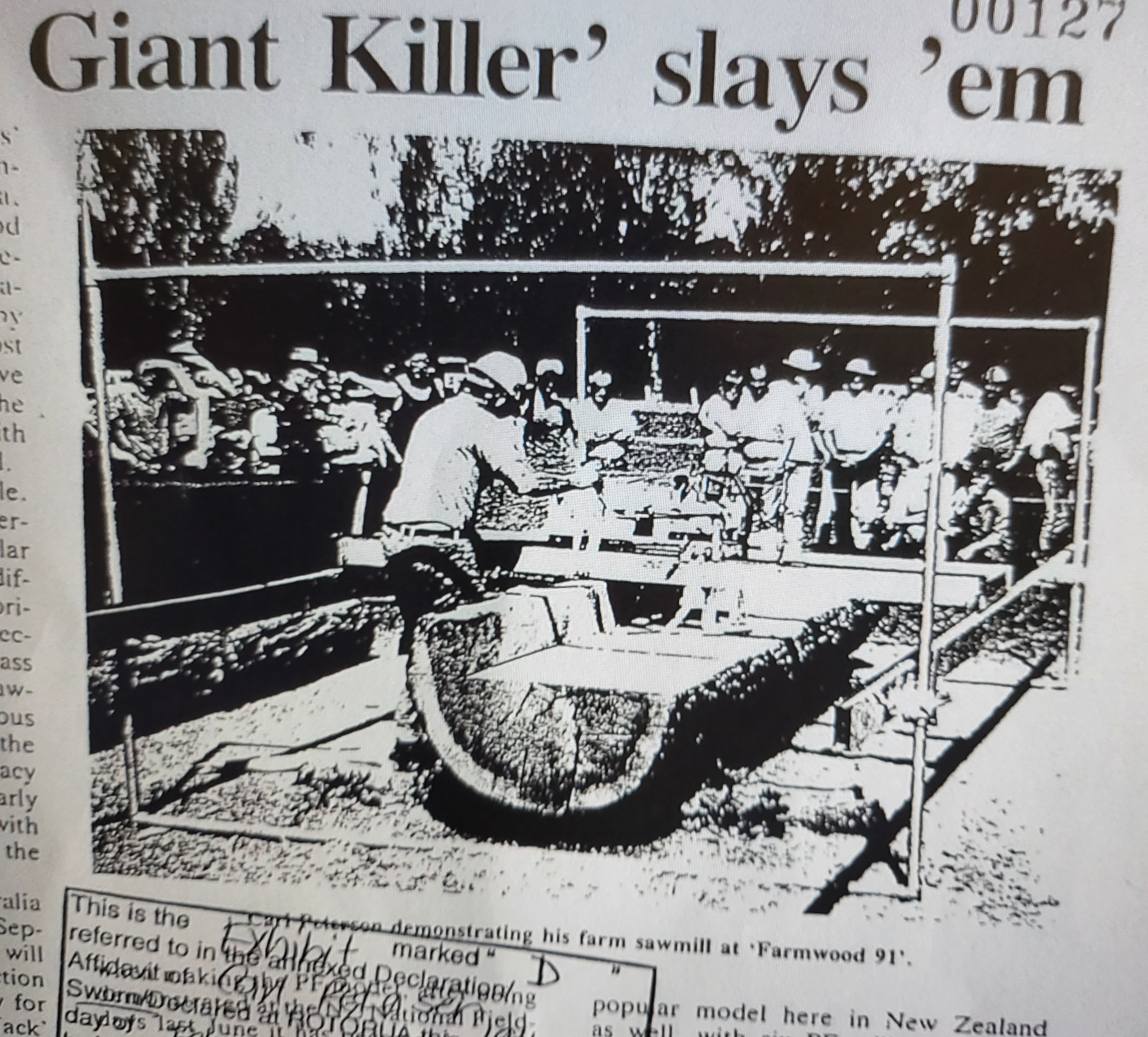
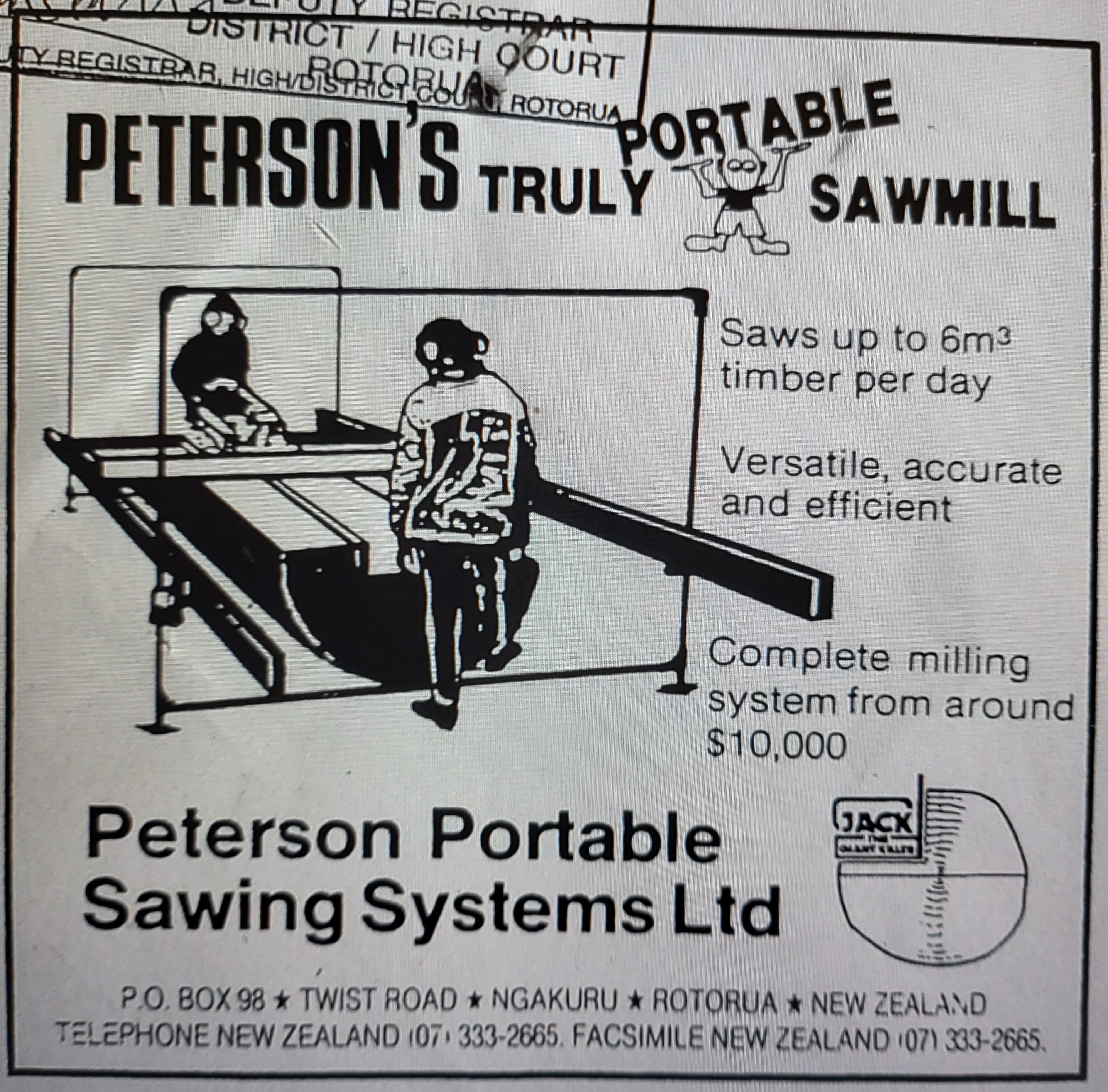
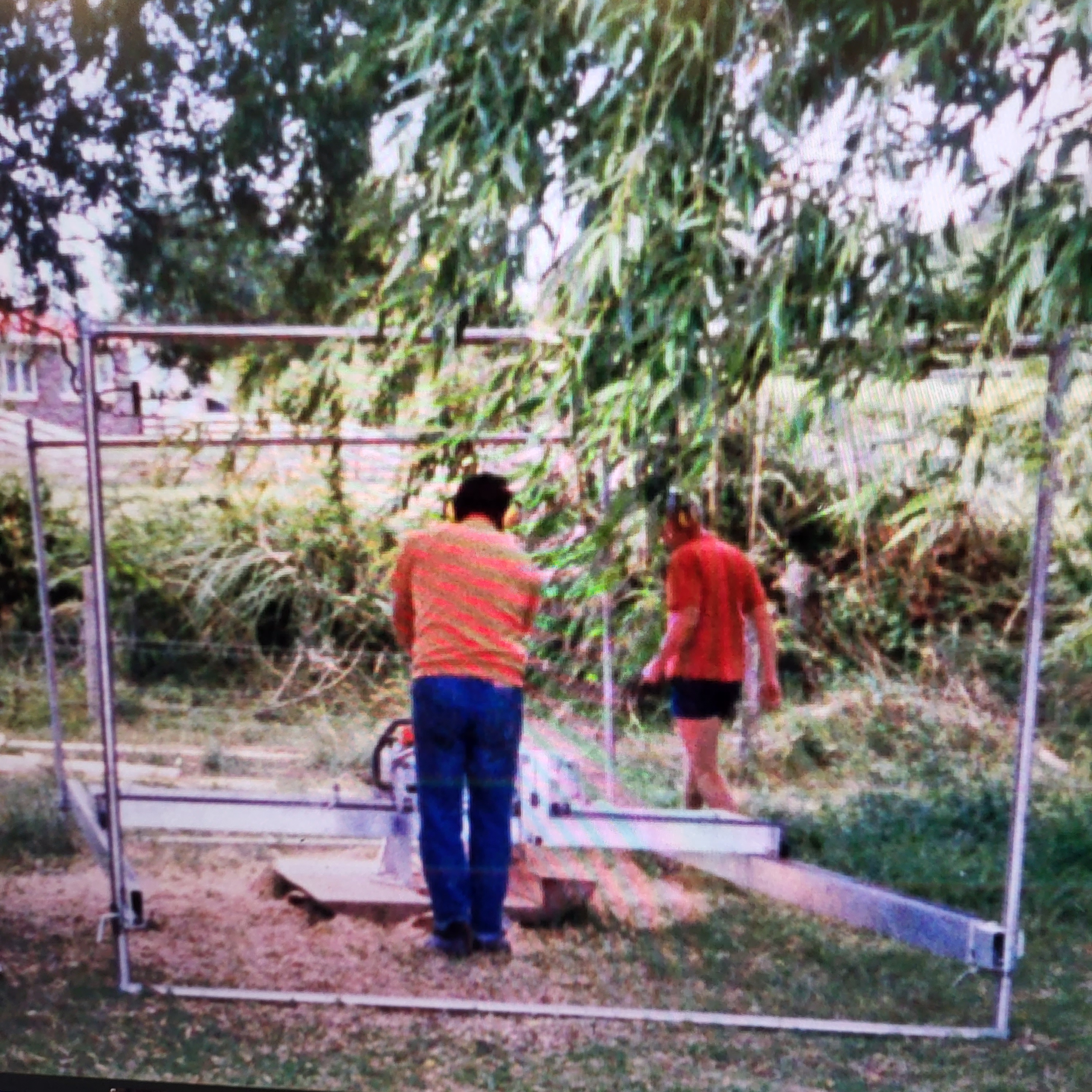
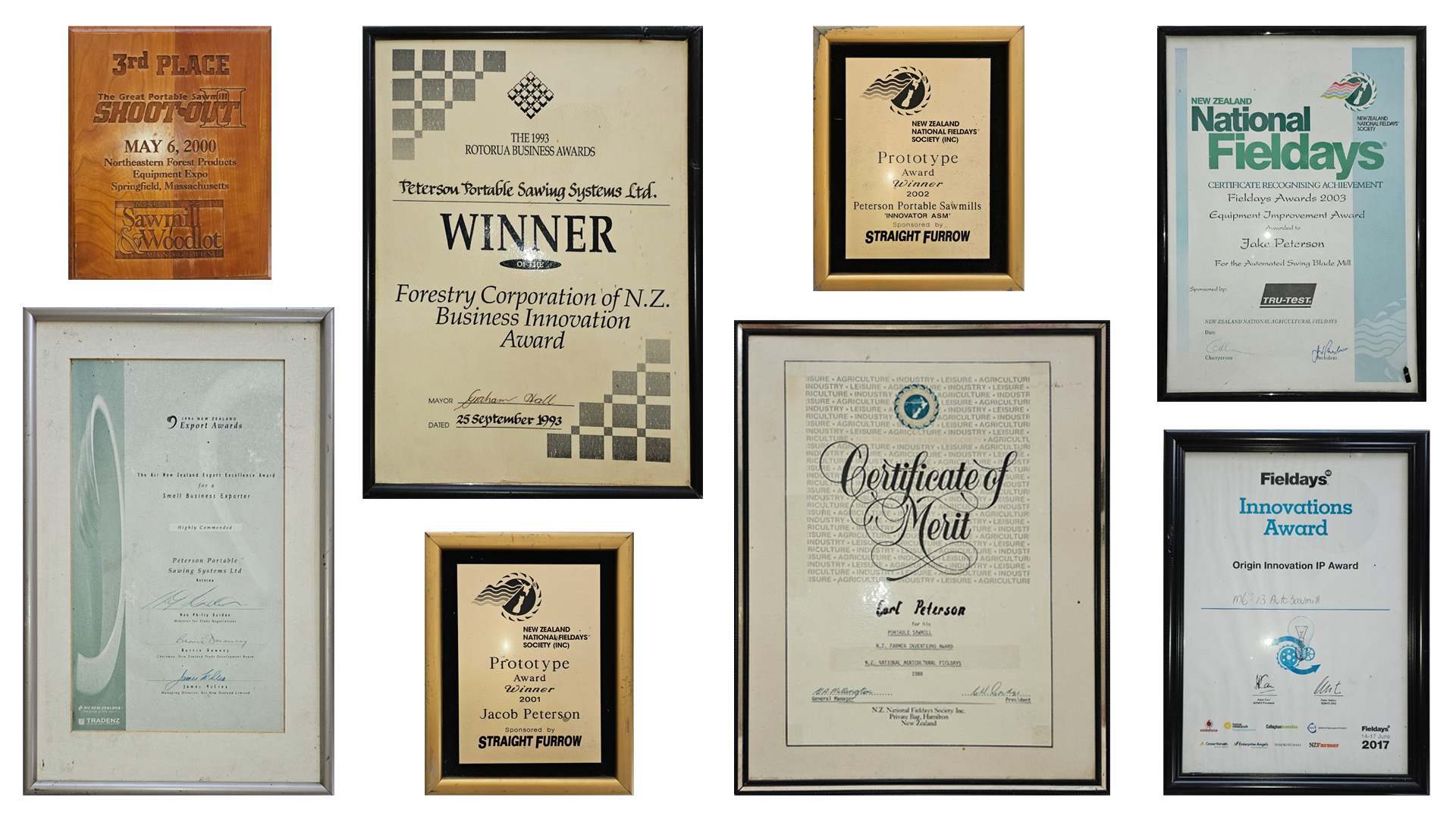
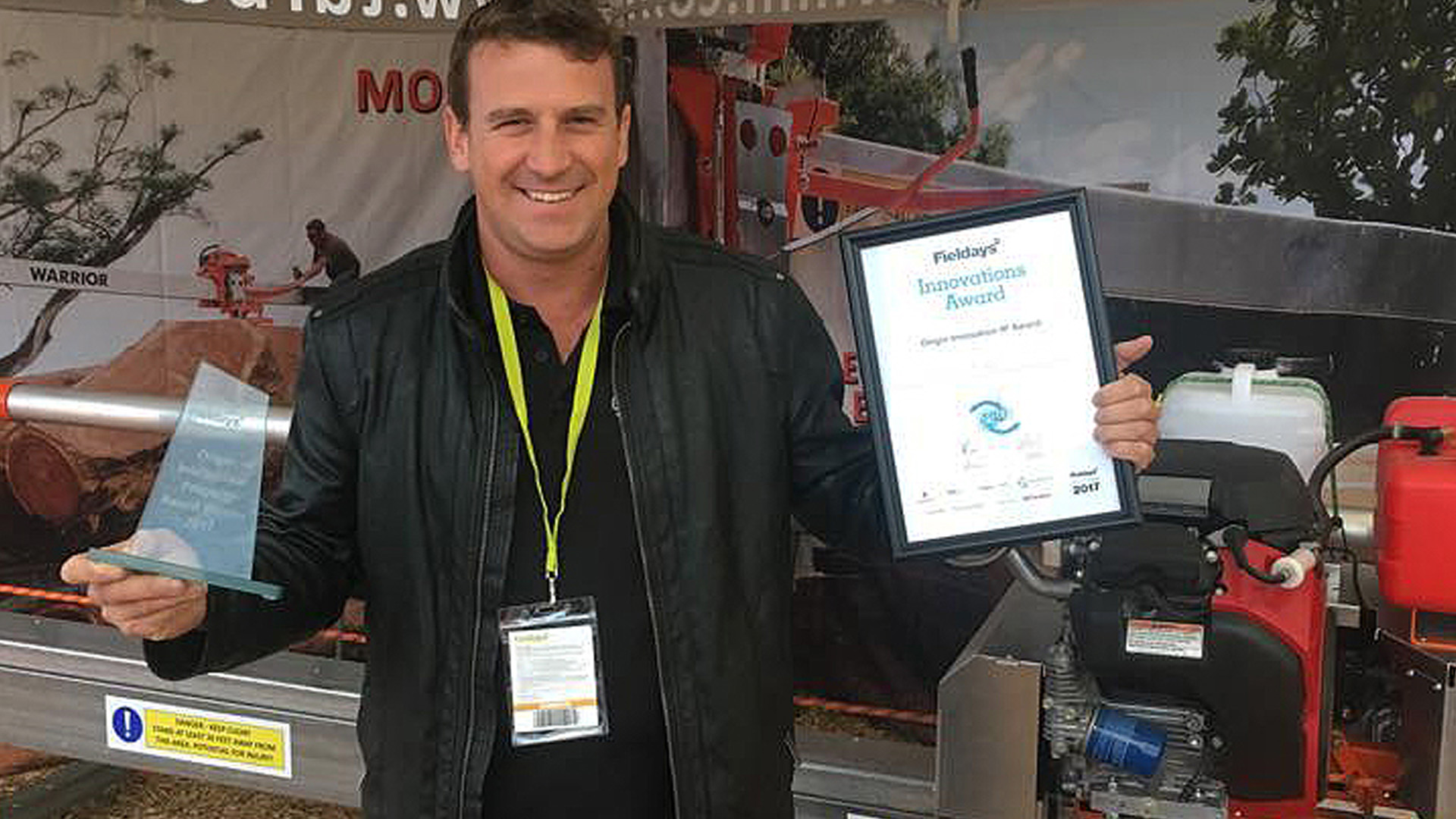
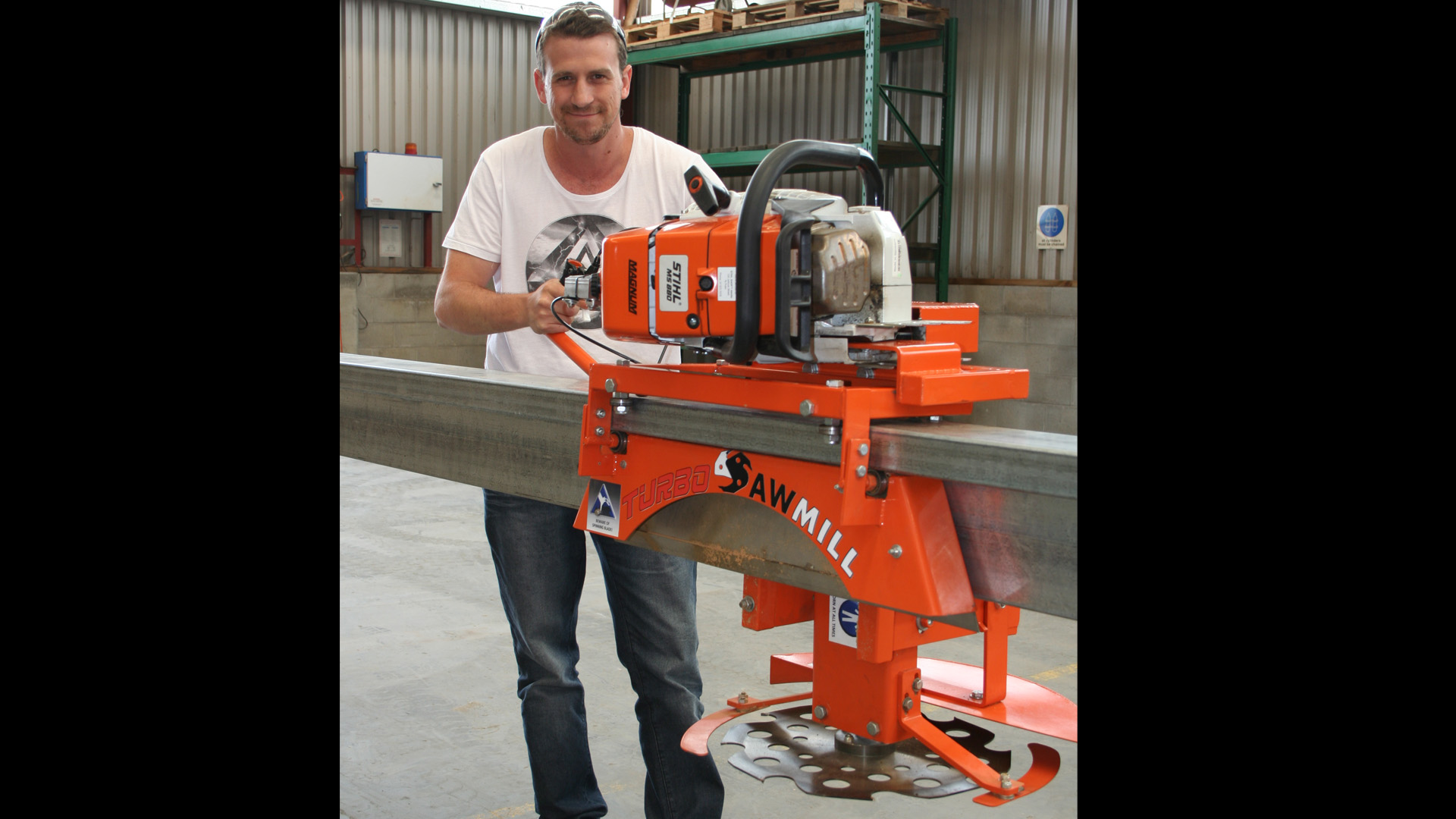
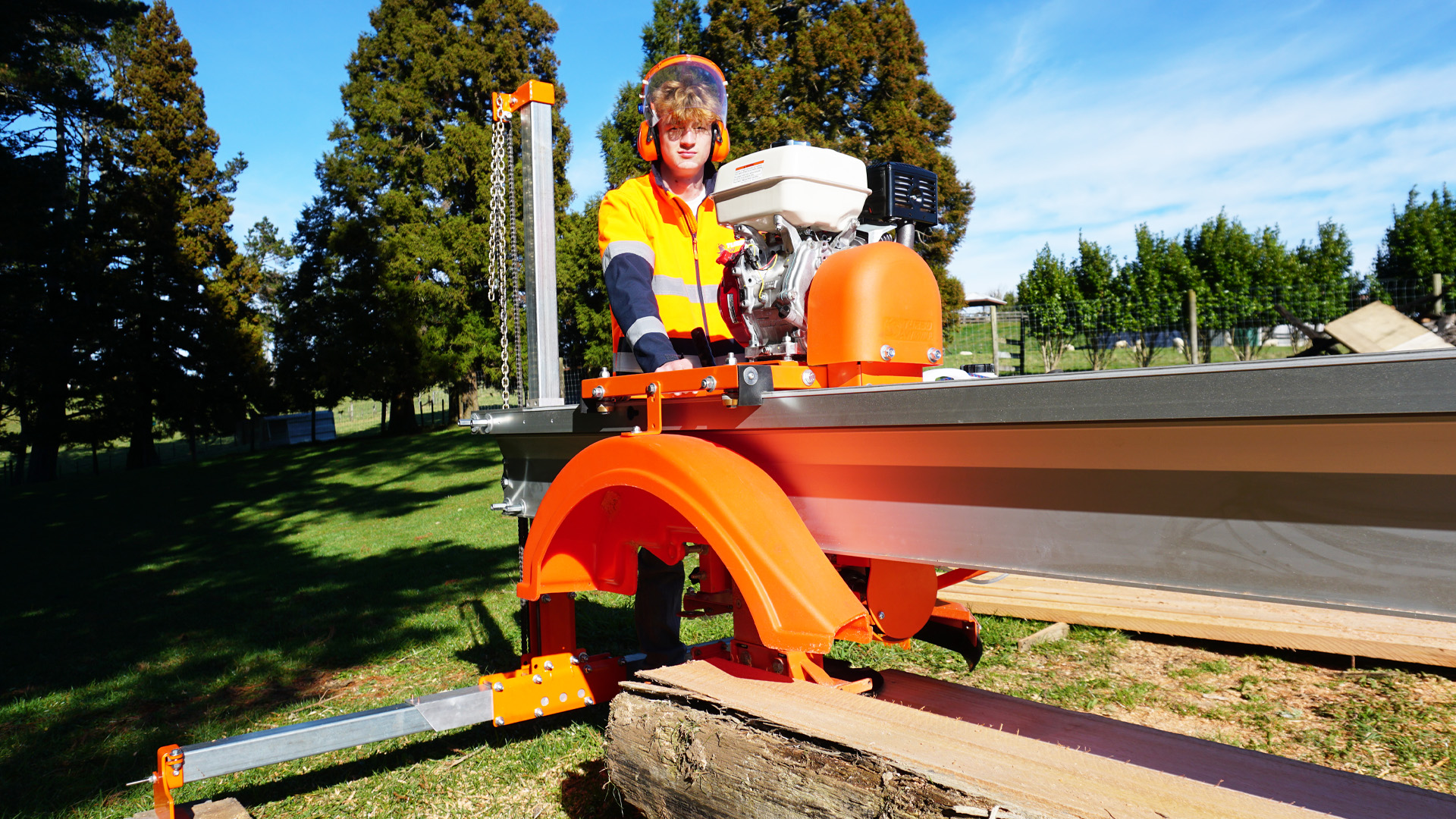
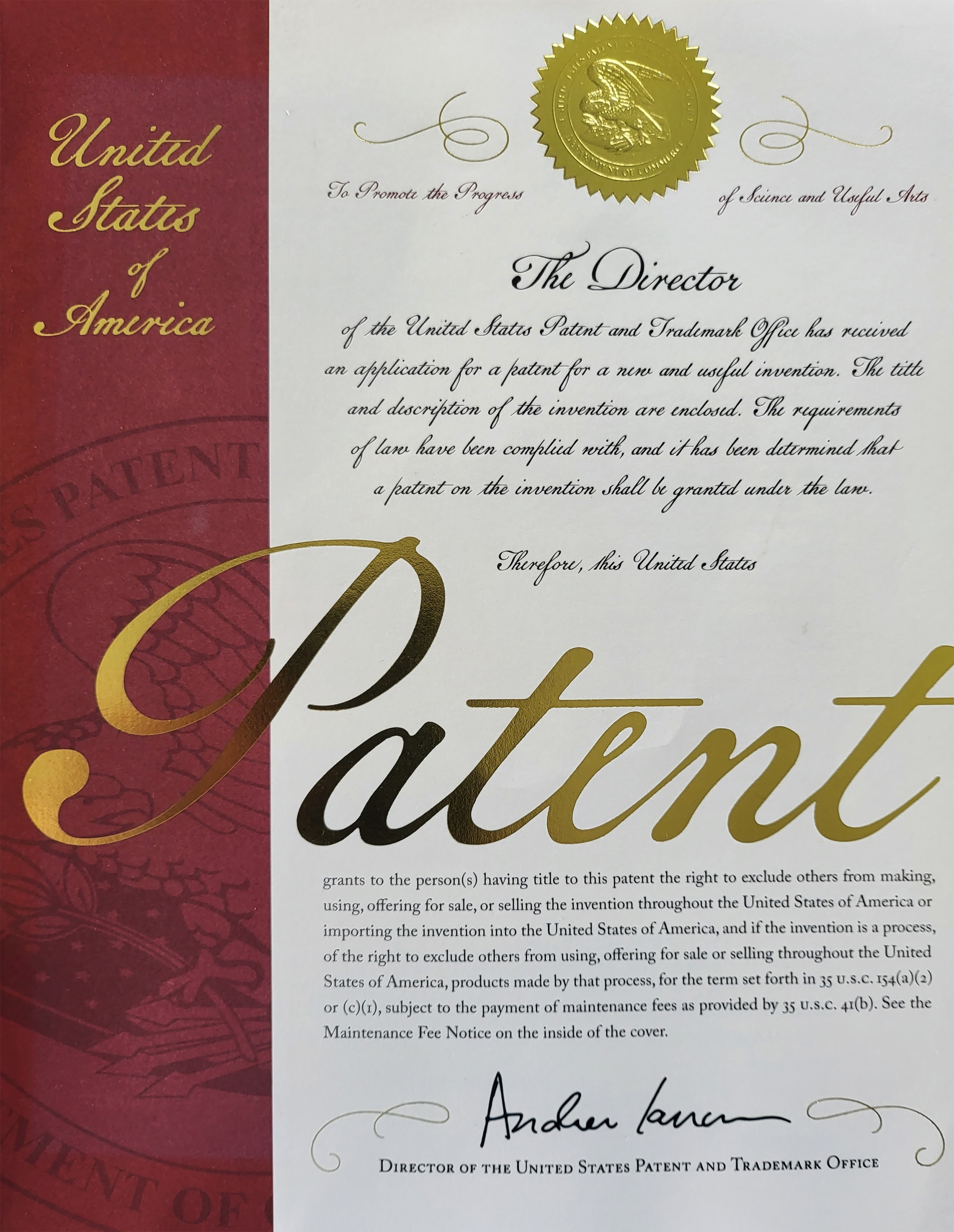
The patent photograph shows the certificate cover; it does not identify the patent number or its claims. Historical photographs document earlier machines and working practices.
06 / The moving archive
Watch the story
take shape.
These films bring together the development history and supporting videos from our original pages. Dated films are arranged by the years given in the family archive. Carl’s recorded recollections appear above.
2008 / Working the mill
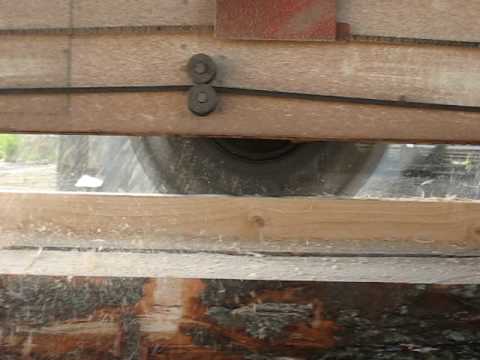
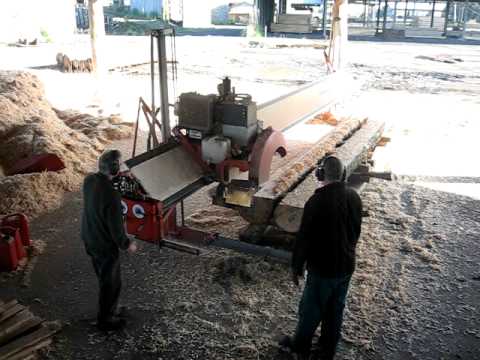
Carl at the controls
Carl operating the Gladiator and feeding it through the timber.
Watch on YouTube ↗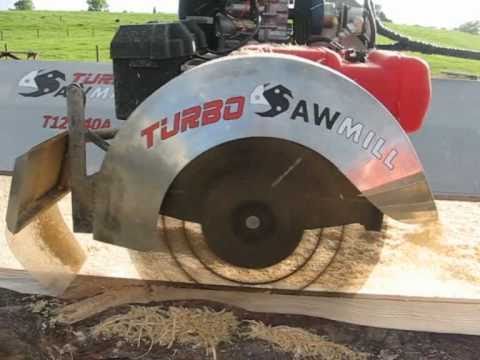
2010 / First promotion
The early possibilities
Early experiments, including a combined swing-blade and twin-blade concept.
Watch on YouTube ↗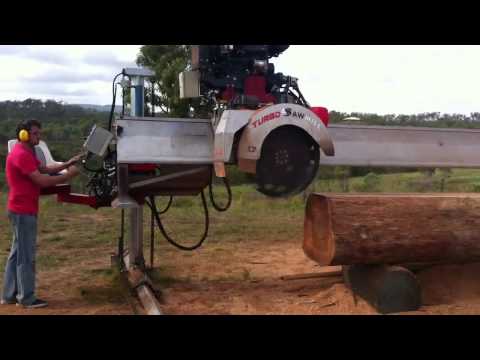
2012 / Automation
Computer sizing arrives
Early electronic sizing, developed with Tailored Controls.
Watch on YouTube ↗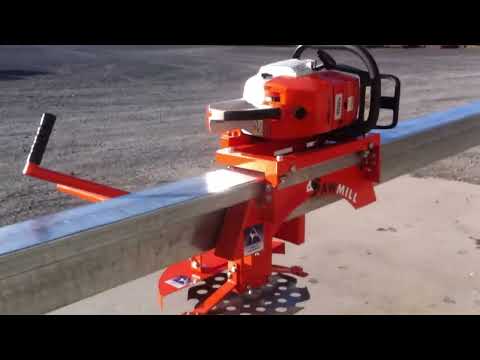
2013 / Monorail
Chainsaw power. One rail.
The chainsaw-powered monorail design that reached remote milling communities.
Watch on YouTube ↗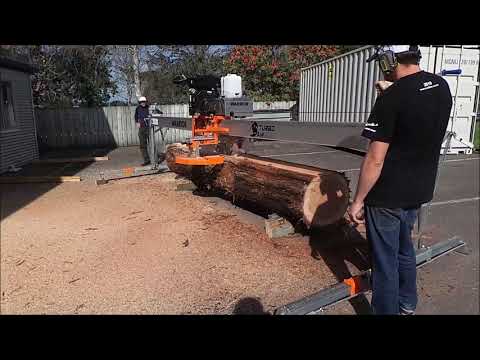
2014 / A turning point
A simpler automated mill
Simplified automation, with Carl alongside Jake during the breakthrough.
Watch on YouTube ↗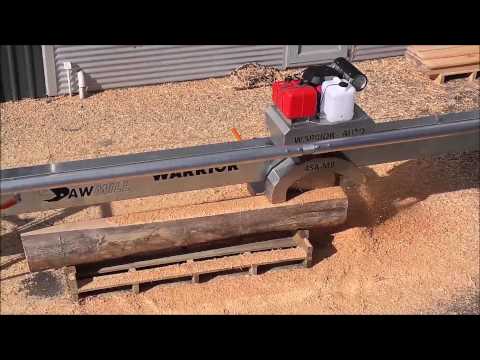
2015 / Refinement
The design comes together
A more refined automated sawmill, approaching the familiar Turbosawmill form.
Watch on YouTube ↗Experiments & further memories
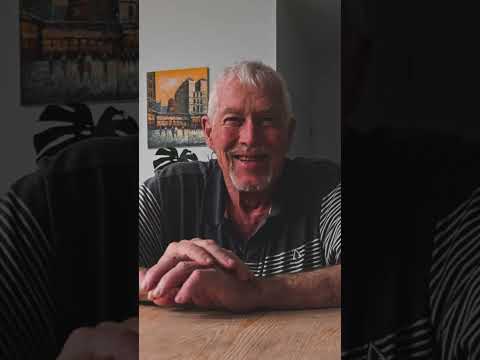
Carl / Family film
Carl and the swing-blade story
A family film featuring Carl Peterson.
Watch on YouTube ↗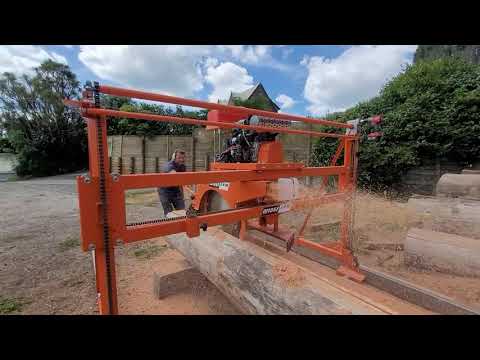
Design archive / Undated
The ground-frame experiment
A two-rail alternative explored during development.
Watch on YouTube ↗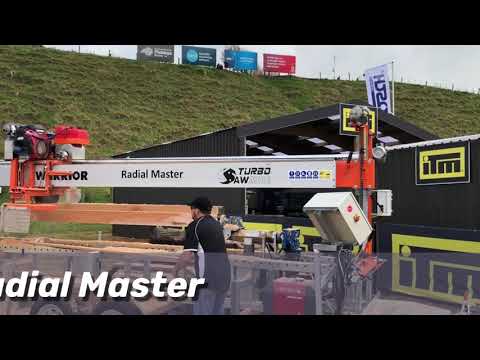
Design archive / Undated
The Radial Master
An experimental machine with controlled log rotation.
Watch on YouTube ↗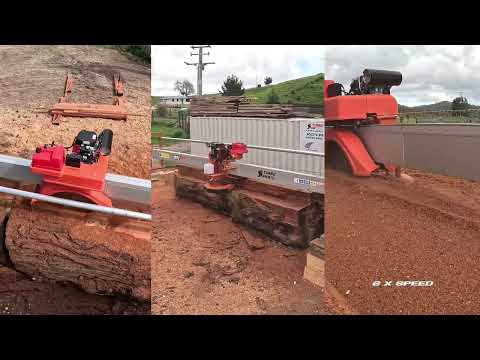
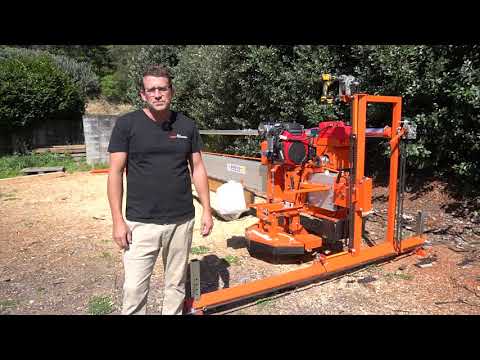
Further viewing
The Turbosawmill approach
The design overview linked from the same family-history page.
Watch on YouTube ↗Every film has a direct YouTube link as well as an in-page player. Films start only when you choose to play them.
07 / What carries on
Three generations.
One enduring curiosity.
Now my son Quinn is learning the work too. Seeing him weld, assemble and operate a mill brings the family story into another generation.
What carries forward is more than a set of designs. It is the willingness to become interested in a problem, learn through doing, and make something better with the knowledge you have.
Dad’s influence also lives with the sawmillers who put his ideas to use: people making timber for a home, earning a living, or finding greater independence in their work. Each has their own story beyond the machine.
For our family, the inheritance is personal. We carry his example, his questions, his humour and the memory of being around him. There is no finished machine that can contain all of that. It lives in people.
Carl / Jake / Quinn
Ideas passed on.
New chapters ahead.
Our family’s sawmilling story continues, shaped by the man who helped set it in motion.
In loving memory
A name.
A life.
A lasting place.
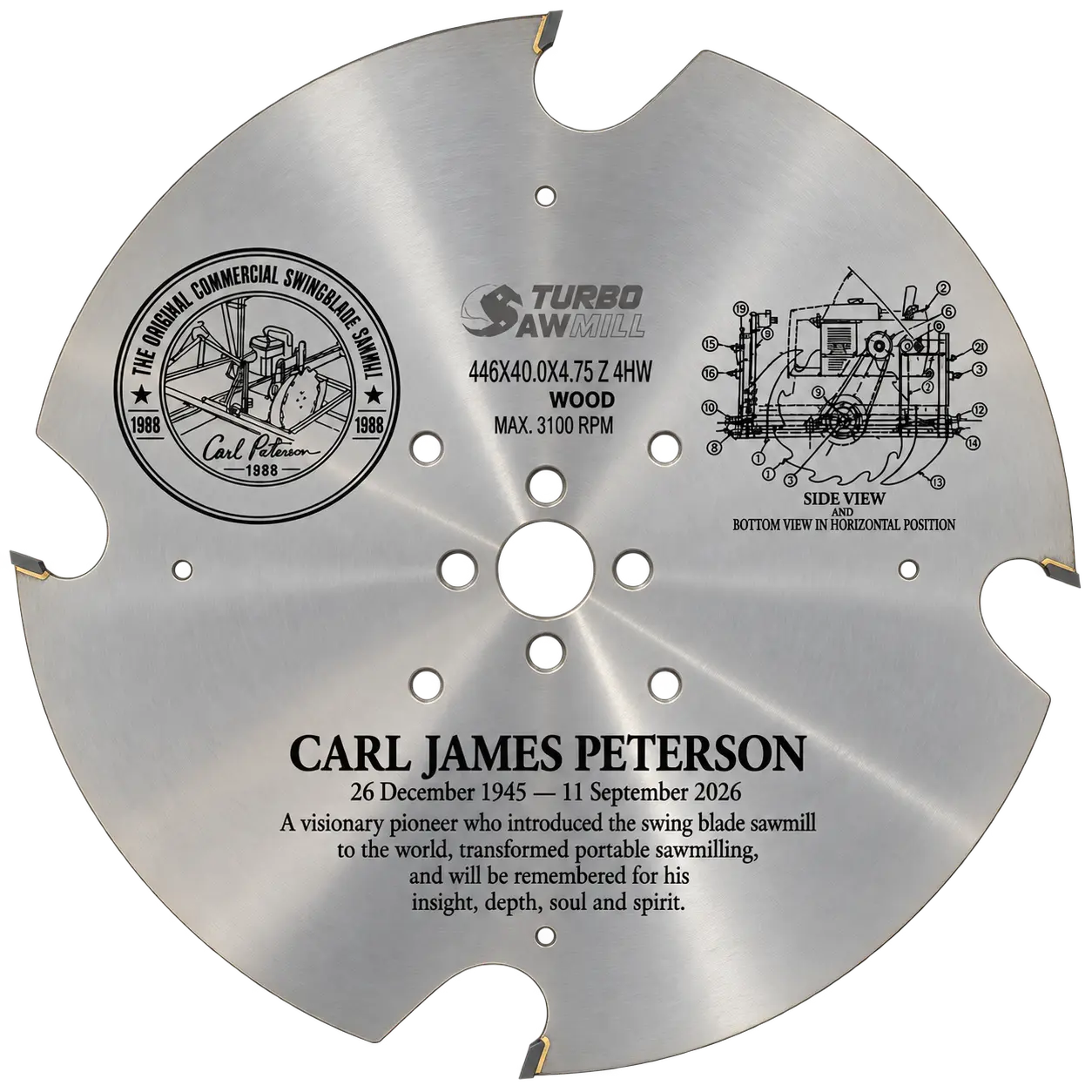
“A visionary pioneer who introduced the swing blade sawmill to the world, transformed portable sawmilling, and will be remembered for his insight, depth, soul and spirit.”
Carl James Peterson
From the family’s memorial blade inscription
Remembering Dad
Thank you for the ideas.
And for everything beyond them.
We remember Carl with love and gratitude: for the work, the support, the stories, and the person he was. His place in our family, and in the history of portable sawmilling, remains.
— Jake Peterson