

TURBOSAWMILL - WHAT'S HAPPENING
NEWSROOM
UK Dealer – Riko UK
Turbosawmill Appoints Exclusive UK Dealer
Official Announcement: Turbosawmill Appoints Exclusive UK Dealer
We’re proud to announce that Riko UK Ltd has been appointed as the official United Kingdom dealer and agent for Turbosawmill.
Riko UK has been supplying specialist forestry, sawmilling, and timber processing equipment throughout the United Kingdom for many years and has built an outstanding reputation within the industry. Their commitment to quality products, professional service, and long-term customer support makes them an ideal partner to represent the Turbosawmill brand in the UK market.
With extensive experience supporting woodland owners, contractors, estate managers, and commercial sawmill operators, the Riko UK team is exceptionally well positioned to assist customers in selecting, commissioning, and operating Turbosawmill equipment. Their strong nationwide presence and established support network will ensure UK customers receive first-class service from initial enquiry through to ongoing operation.
Our New Zealand team will continue to work closely with Riko UK, providing full technical, logistical, and after-sales support to ensure a seamless experience for customers throughout the United Kingdom.
Contact – Official UK Dealer
Riko UK Ltd Inverallen Yard Forge Road Kingsley Bordon Hampshire GU35 9LW United Kingdom
🌐 www.riko-uk.com ✉️ sales@riko-uk.com 📞 +44 1420 487300
Services Available in the United Kingdom
We’re excited to strengthen our presence throughout the United Kingdom with Riko UK leading Turbosawmill operations on the ground.
For all UK enquiries, sales, demonstrations, and support, please contact the Riko UK team directly.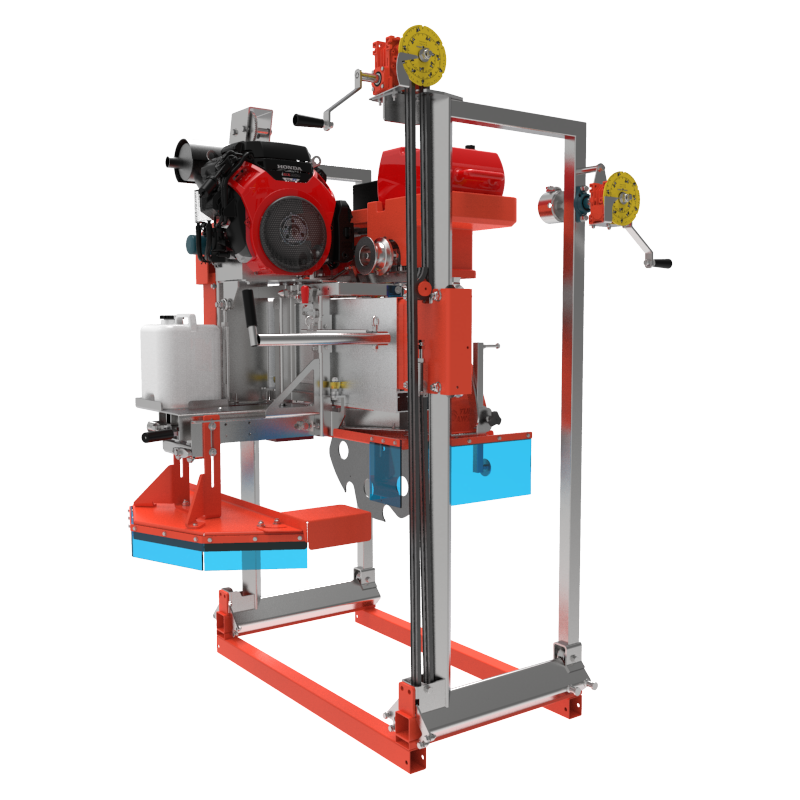
2026 M12 Evolution
Major M12 Sawmill Upgrades for 2026
Para 2026, estamos a fazer uma atualização significativa na serração M12.
Espere uma construção totalmente em aço inoxidável, uma estrutura muito maior e um aumento na altura de corte e na capacidade de diâmetro dos troncos em mais 24 polegadas/600 mm.
Também estamos a mudar a forma como a máquina é enviada — as estruturas serão encaixadas com o carro pré-instalado no centro para uma configuração mais rápida e fácil 🔧. Vigas de comprimento total sem juntas estarão agora disponíveis como opção.
Grandes melhorias, construções mais limpas e montagem mais fácil — muitas mudanças emocionantes a caminho para 2026
Faça a sua encomenda agora.
3 Generations of Mills
3 Generations of Swing-Blade Sawmill Builders
Três gerações de pioneiros da serração
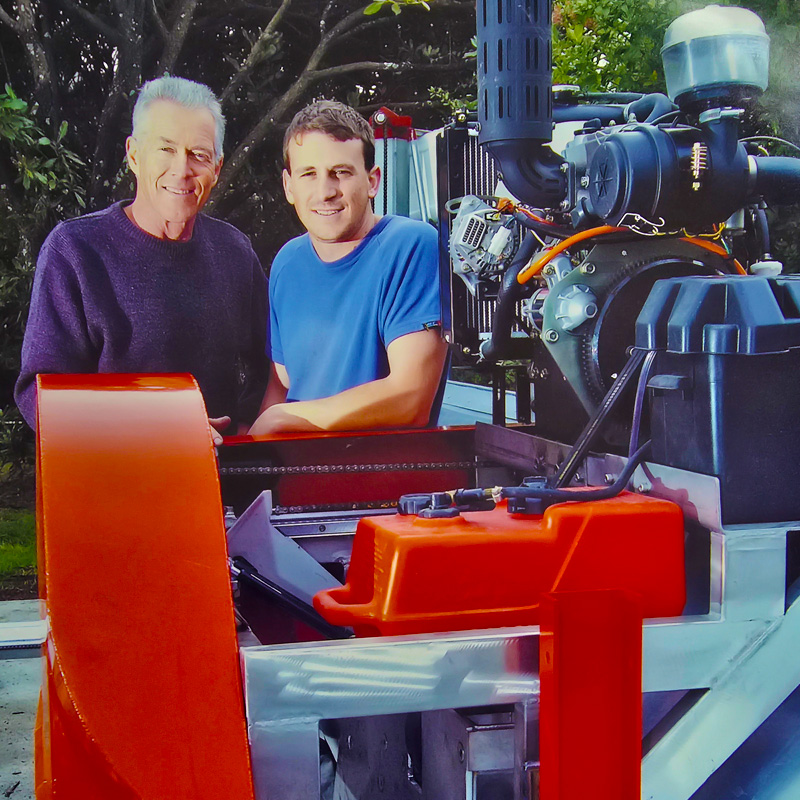
Let’s rewind to the tropical shores of Fiji, where my dad, Carl Peterson, was playing mad scientist on 500 acres in Navutu out of pure necessity. Picture it: the northern tip of the smaller Fijian island, and there’s Carl, battling jungle humidity with his very first swing-blade sawmill prototype. Now, “swing-blade sawmill” is a bit of a stretch—it was basically a chainsaw bolted onto a circular saw blade with a homemade jig. Dad would line it up, make one horizontal cut, then shuffle the whole contraption to make a vertical cut. No swing axis yet, just good old-fashioned manual labour. Then came the 1987 coup. While Fiji was flipping upside down, Dad stayed behind to wrangle his pig farm, and my family high-tailed it to Rotorua, New Zealand. As it turns out, being a pig farmer with a side hobby of defending neighborhoods during political unrest wasn’t exactly inconspicuous. Not long after we arrived in NZ, we saw the news: “American Pig Farmer Detained in Fiji.” Sure enough, it was Carl. He'd stood up against the chaos, and at one point, 200 soldiers showed up at his door, threw him in a sack, beat him, and took him to jail. Thankfully, he managed to get free and make a quick exit on the next flight out, leaving his pig farm dreams—and his belongings—behind. Fast forward to late 1987 in Rotorua, and we’re dirt poor. But Dad’s still inventing, and soon enough, he’s cobbling together his first “commercial” swing-blade sawmill using parts that would make MacGyver proud: old bike gears, scrap metal, and a glue gun. Welding wasn’t in his toolkit, so rivets and glue held it together, with a belt-driven chainsaw powering the blade. This time, he rigged it with a swing mechanism that rotated for both horizontal and vertical cuts. It was pure scrappy genius. I was just a kid, but I remember going to our first big agricultural show. Farmers stacked up like human Jenga on anything they could climb to get a glimpse of this wild contraption. Word spread fast—this mill could handle the giant trees of New Zealand, and it was like the little engine that could! It didn’t take long before Dad scored a government grant, turning his garage tinkering into Peterson Portable Sawing Systems Ltd. Farmers loved it, and those early mills are still going strong. An Australian company jumped on board to distribute his mills down under. But soon, they decided they wanted a slice of the sawmill pie for themselves, creating their own version of Dad’s original swing-blade design, going head-to-head with him in court. The legal battle was brutal. Dad won the case, but it drained the business. Today, my sister still sells those early models under a new company structure, while I took my own route, pushing the sawmill game even further with Turbosawmill. I started out in Dad’s company around 2000, sweeping floors and learning the ropes. Welding, assembling, tinkering—whatever needed doing. Eventually, I started building my own “Jake special sawmills” to make some cash on the weekends, learning all the tricks of the trade. But I kept wondering: why are people still pushing these sawmills around manually? This tech had serious potential for automation. I became obsessed, and in every spare minute, I worked on new ideas to automate the whole process. Eventually my dad saw my passion and greenlit the project, backing the development under his company. One moment that stuck with me. I was shown a picture that was placed at one of Dad’s agricultural show booths. A competitor, who made a twin-blade sawmill at the time, had posted it. It was a cartoon of a character sweating while pushing one of Dad’s early mills, with the caption: “Peter and Son – Pushing for a Living.” I thought it was hilarious, but they were right. That little jab gave me even more fuel to improve our mills, to design something that took the grunt work out of sawing. While working with my dad, I earned a few awards and patents under my name for my inventions, but the real breakthrough came when I succeeded in creating the first commercially available automated swing-blade (ASM). I personally engineered (with the sponsorship of my dad’s company) all the automation elements that transformed the existing manual sawmill into a fully automated powerhouse. That was a huge step, but the real leap forward happened when I branched out in partnership with my dad. Together, we had a shared vision: to revolutionize the swing-blade sawmill. We crafted the Turbosawmill, featuring a straightforward monorail system, smooth, simple automation, and open access to work the logs with ease. Our first prototype introduced something else the industry had been eagerly awaiting: a model with a 12” cutting capacity. It’s not perfect—no sawmill is—but it was a true game-changer, pushing the industry forward in ways we’d only dreamed of. And now, the Peterson family legacy rolls on to the next generation: my son, Quinn. It’s wild to think that after all this, he’s picking up the torch—or in our case, the welder. Watching him get his hands dirty in the same way I did—welding, assembling, running the mill—it’s like a full-circle moment. He’s learning the ropes, and I can already see that spark of innovation in him. He’s not just taking up the family trade; he’s ready to push it further. I couldn’t be prouder to watch him add his chapter to this story, carrying forward the Peterson name and legacy into the next frontier of sawmills. So here we are, three generations deep in the Peterson family sawmill legacy. What started with a chainsaw, some bike parts, and a pig farm has become an entire industry. By Jake Peterson. Para maior clareza, observe que a empresa do meu pai, Peterson Portable Sawing Systems Ltd., foi liquidada em 2005. A Turbosawmill opera independentemente da Peterson Global Ltd. (a empresa atual que comercializa os produtos originais do meu pai), que pertence a outros membros da família. Embora partilhemos uma história familiar comum, somos empresas distintas, com propriedade e operações separadas.-

- Parede de prémios concedidos a Carl e Jake

-
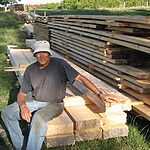
- O grande contrato de trabalho de Carl
-
- Prémio Turbosawmill de Jake

-
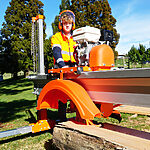
- Quinn a testar o Warrior
-
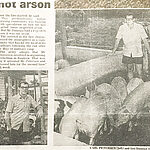
- Eventos do pai nas Fiji
-
- A primeira lâmina oscilante para motosserra de Carl
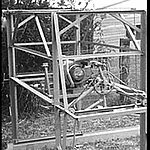
-
- A primeira lâmina oscilante da motosserra de Jake
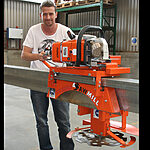
-
- Carl a testar o M12
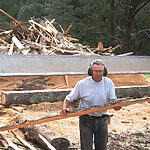
-
- Carl a afiar a lâmina na nossa primeira M12
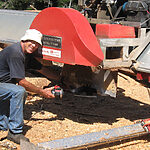



Canada – Swift Fox
Swift Fox – Official Turbosawmill Canada Agent
Official Announcement: Turbosawmill Appoints Exclusive Canadian Agent
We’re proud to announce that Swift Fox Industries has been appointed as the official Canadian agent for Turbosawmill. Based in Alberta, Swift Fox Industries is highly regarded for its hands-on experience in forestry and timber equipment. Their team brings deep industry knowledge, strong local presence, and a commitment to customer support, making them the ideal partner to represent Turbosawmill across Canada. With Swift Fox Industries on the ground, Canadian customers will benefit from faster access to Turbosawmill products, local expertise, and dedicated after-sales support. 🪵 Bulk Stock Available in Canada Swift Fox Industries now holds bulk Turbosawmill stock locally, ready for immediate dispatch nationwide. This means shorter lead times, simpler logistics, and a smoother purchasing process for Canadian buyers. Contact – Official Canadian AgentSwift Fox Industries
Kevin Romeo 📧 kevin@swiftfoxindustries.ca
📞 +1 (403) 555-1234
Linda Romeo 📧 linda@swiftfoxindustries.ca
📞 +1 (403) 555-5678
Services Available in Canada Swift Fox Industries provides full national coverage, including: 🚚 Nationwide delivery 🛠 Assembly and operator training 🧰 Technical support and parts assistance 🪵 Local stock and rapid dispatch We’re excited to expand Turbosawmill’s presence across Canada with Swift Fox Industries as our official agent. For all Canadian enquiries, sales, and support, please contact Kevin or Linda directly.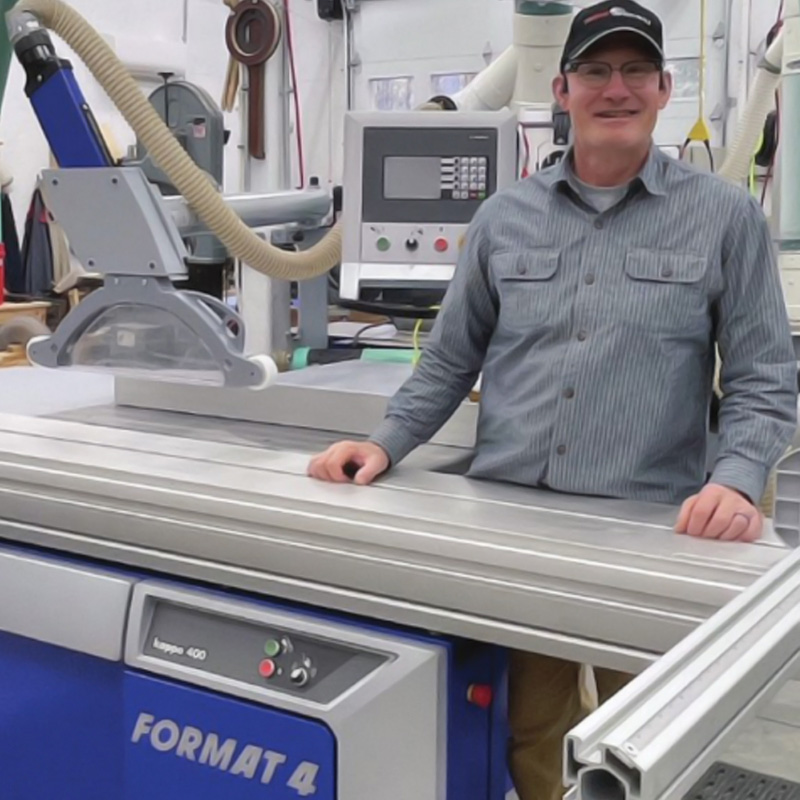
David Shore – M12-28A
Turbosawmill Gains Ground Across the USA
As serra elétricas portáteis com lâmina oscilante da Turbosawmill ganham terreno nos Estados Unidos
Automated Warrior Model Proves Ideal for Custom Woodworkers By Diane Calabrese – Timberline Magazine DUDLEY, Georgia — «Porque não?» That was the question David Shores heard repeatedly—from customers who admired his custom woodwork and from friends who knew his passion for timber. Why not buy a portable sawmill and cut his own lumber? David had considered it for years, but it wasn’t until 2019—after moving from the city to rural Georgia and acquiring acreage—that he began seriously exploring the idea of owning a mill. From the outset, he knew exactly what he wanted: a circular swing-blade sawmill capable of producing quarter-sawn lumber. Unlike band mills, swing-blade systems use a circular blade that pivots 90 degrees, allowing both horizontal and vertical cuts. This capability makes it possible to produce accurate dimensional timber directly from the log, while also cutting forward and backward for greater efficiency. After extensive online research and countless hours watching demonstrations, David discovered Turbosawmill, a New Zealand-based manufacturer of advanced swing-blade sawmills. The more he learned, the more convinced he became that he had found the right system.Uma serração construída com base na experiência
Turbosawmill was founded by Jake Peterson, who grew up immersed in the swing-blade industry. “I wanted to build a better, more practical swing-blade sawmill based on everything I had learned from real-world milling,” Peterson explained. From a young age, Peterson had been involved in operating, designing, and improving swing-blade mills. His philosophy was simple: build machines that are powerful, intuitive, reliable, and versatile. “Our goal has always been to keep the system simple to operate and maintain, while maximizing capability and productivity,” he said. David quickly recognized those qualities in the Turbosawmill design. “It’s simple to use, performs exceptionally well, and the support from the manufacturer has been excellent,” he said. “It’s a solid, well-engineered machine.”Da primeira fábrica ao sistema automatizado
David purchased his first Turbosawmill in 2020—a 10-inch Automated Warrior model. Within a year, he decided to upgrade to the 12-inch Automated Warrior system. “The main reason was the factory-installed digital sizing system,” he explained. The computerized setworks provides precision, repeatability, programmable cutting patterns, and push-button control. It also enables section cutting, which breaks deep cuts into manageable passes—particularly valuable when milling dense hardwoods or stressed logs. “In difficult logs, section sawing allows you to produce high-quality timber instead of fighting the wood and burning blades,” Peterson noted. David’s upgraded mill is powered by a 25-hp Honda petrol engine, which he describes as an ideal match for the system.Superando os limites dos moinhos tradicionais
During his research, David had initially considered a band mill. But the deeper he looked, the more limitations he identified: log size restrictions, dependence on hydraulics, frequent blade changes, sharpening costs, and the need for heavy equipment to handle logs. By contrast, the Turbosawmill’s open monorail design allowed him to position the mill directly over large logs—eliminating the need to move timber with machinery. Many of the logs David has milled since purchasing his Turbosawmill would have been impossible to process on a typical band mill.A jornada de um marceneiro
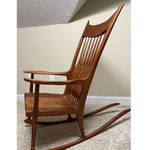
David, now 59, has been a hobby woodworker for decades. Originally from Michigan, he moved to Georgia 30 years ago and now operates a fully equipped 1,500-square-foot workshop in Dudley. His projects range from furniture and architectural timber to custom metal-and-wood pieces. Most of the lumber he mills comes from his own property or nearby landowners—turning trees that might otherwise be discarded into valuable material. Using Turbosawmill-produced timber, he has built a 30×40 pole shed, lean-to structures for air-drying lumber, and numerous custom projects, including a sculpted cherry rocking chair inspired by Sam Maloof.Uma filosofia partilhada
Peterson sees David’s story as representative of a broader Turbosawmill community. “Our customers range from landowners and hobbyists to commercial operators and contractors,” he said. “What they all share is the desire for a system that’s capable, efficient, and adaptable.” With features such as narrow-kerf insert blades, slab-cutting attachments, planer heads, and trailer kits, Turbosawmill systems continue to attract operators seeking flexibility without complexity.Para David, o apelo é simples.
“A melhor parte é criar algo tangível com as próprias mãos”, disse ele. “Transformar troncos em madeira serrada e ideias em objetos reais — é isso que faz tudo valer a pena.”
John Bailey – M10-22A
Mill Pays for Itself More Than 10 Times Over
“$240,000 in Timber Value — and Still Cutting”
John Bailey, Norfolk Island Machines: Turbosawmill M10-22A and M12-28A (second mill recently added) After nearly 590 engine hours of operation, John Bailey’s Turbosawmill systems on Norfolk Island have delivered results that far exceed expectations. “By our calculations, the mill paid for itself more than ten times over — and we’ve cut a lot more since then.”Performance and Output
To date, John’s mills have achieved: Nearly 590 Honda engine hours Average production of around 4 cubic metres per day (often underestimated depending on log size and site conditions) More than 300 cubic metres processed to date (approx. 126,600 board feet) Timber value exceeding $240,000 — likely significantly more “These figures are conservative,” John notes. “In reality, we’ve probably produced far more than we’ve recorded.”Real-World Milling on Norfolk Island
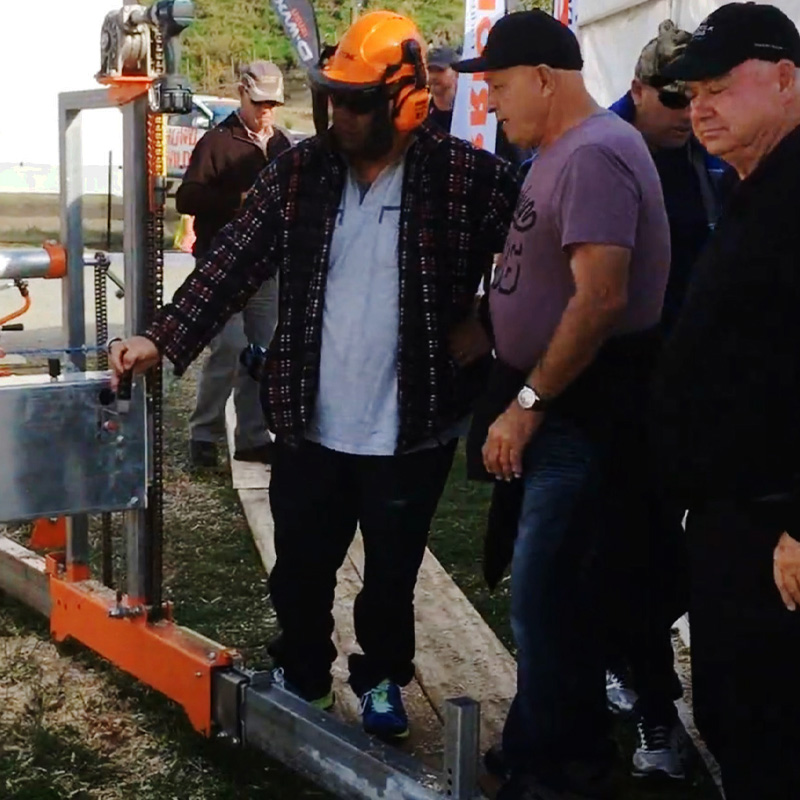
Operating conditions on Norfolk Island are far from gentle. The mill is frequently set up in exposed coastal environments, often on windswept clifftops under large pine trees. “We move the mill around the island to avoid hauling logs,” John explains. “It’s faster to bring the mill to the timber than the timber to the mill.” Setup time averages around 30 minutes. “It usually takes me longer to find where I left the truck’s tow ball than it does to set up the mill.” To handle oversized logs, John and his team engineered adjustable leg extensions, enabling them to mill butt logs exceeding 1.4 metres in diameter — sometimes working from a step ladder.The primary species milled include:
Norfolk pine Tallowwood Spotted gum Ironbark Silky oakDurability and Maintenance
Despite harsh coastal conditions, corrosion has been minimal. “The mill hasn’t spent more than two months in a shed since we bought it,” John says. “Considering the salt air, there’s surprisingly little rust.” Maintenance has been straightforward and minimal: Occasional lubrication of chains with Ballistol oil Periodic greasing of main bearings Drive rope replaced every few months Auto-feed belts replaced twice Main drive belts replaced several times until switching to heavy-duty A59 belts, which have proven highly durable Upgrade to 7 mm insert-tooth blades, delivering improved performance and longevity In nearly 590 hours, only one significant component failure occurred — a collapsed carriage bearing. “Our local supplier had replacements in stock. We were back up and running within hours.”Built to Withstand Real Work
John recalls one incident that tested the mill’s structural integrity. “A careless bulldozer operator rolled a massive log under the mill. The bucket slipped and lifted the entire mill about six feet into the air before dropping it back to the ground at speed. There was no damage to the beam or structure whatsoever.”From Hobby to Commercial Capability
Although John and his partner Michael Prentice are not full-time commercial millers, their output rivals professional operations. “We mainly mill on weekends, days off, or when we need timber for projects,” John explains. “But we could easily operate commercially if we wanted to.” John’s background as a joiner, cabinetmaker, and boatbuilder means the mill integrates seamlessly into his work. He always has access to high-quality timber for custom projects, while Michael — Norfolk Island’s largest tourism operator — has used Turbosawmill timber to construct entertainment venues, fencing, decks, flooring, and major infrastructure across the island.A Practical, Profitable Machine
For John, the Turbosawmill has proven itself as a robust, practical, and highly productive system. “The mill is tough, well-built, and incredibly reliable. It’s given us hundreds of hours of trouble-free operation with very little maintenance.”Conservative Figures, Real Results
John is clear about one thing: the numbers tell only part of the story. “These figures are conservative. If anything, we’ve underestimated what the mill has actually produced.” For Norfolk Island, the Turbosawmill has become more than a machine — it’s a cornerstone of local timber production and creative construction.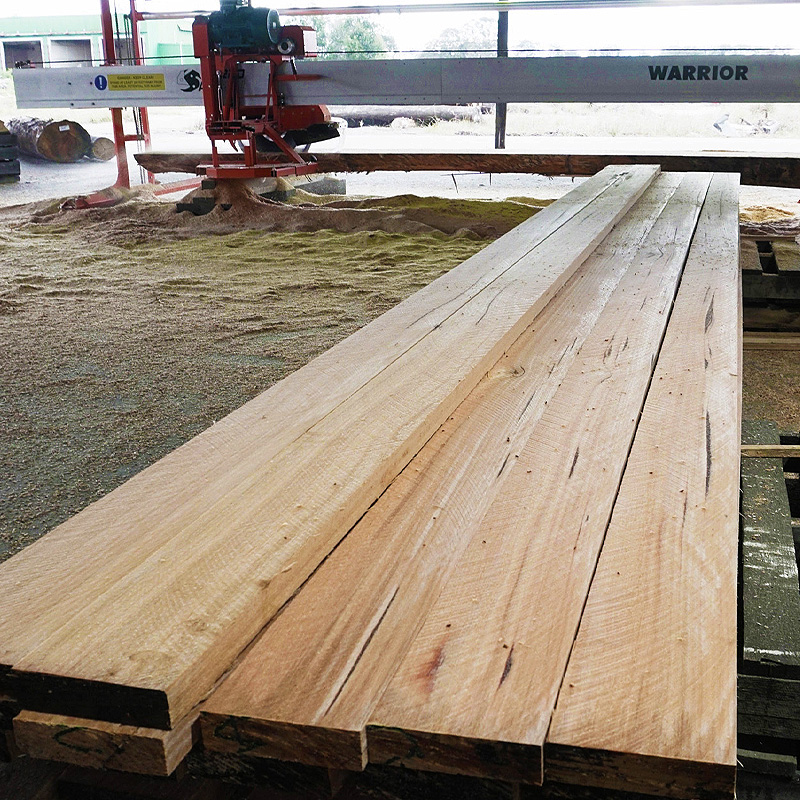
Canningvale – M12-25A
Canning Vale Takes Control with Turbosawmill
“Proven Reliability in a Commercial Timber Environment”
Canning Vale Timbers Pty Ltd – Melbourne, Australia John Mavros & Shannon Helmers For John Mavros, returning to sawmilling was never part of the plan. After decades operating large commercial sawmills, health issues forced him to scale back operations and sell most of his heavy machinery. He retained his land and buildings, continuing in the timber industry by sourcing and reselling timber to long-standing customers. But market demand began to change. Customers increasingly requested custom-sawn timber—special sizes, short runs, and unique cuts that were difficult and time-consuming to source externally. Lead times stretched, margins tightened, and flexibility became essential.That was the turning point.
To regain control over production and offer bespoke timber efficiently, Canning Vale Timbers began evaluating portable sawmill options. Choosing the Turbosawmill In January 2019, Canning Vale Timbers purchased a Turbosawmill M12HD-25A after evaluating several competing systems, including Lucas Mill, Mahoe, and Peterson ASM.The decision was driven by several key advantages:
12" automated cutting capability Open single-beam monorail design Digital sizing (setworks) system Commercial-grade build with compact footprint “Having automation and an open-beam design in a 12-inch swing-blade mill was a major factor,” John explained. Although delivery took several months, Turbosawmill founder Jake Peterson personally attended the site to provide training and commissioning.One Operator, Commercial Output
Today, the mill is operated by Shannon Helmers, a single-operator sawyer working independently within Canning Vale Timbers’ large industrial facility. Despite the scale of the building—which once housed full commercial sawmill equipment—the Turbosawmill integrates seamlessly into daily operations. Log handling is assisted by a forklift, while a secondary bench resaw processes bottom flitches. Before milling, Shannon thoroughly cleans logs with a water blaster to remove dirt and stones. “That extra step dramatically extends the life of carbide teeth,” he says. “Water also keeps the blade cooler, which means smoother cuts and lower power demand.”Daily maintenance is simple:
Cleaning beam rails Lubricating chains and moving parts General inspection Production Performance Shannon typically produces:- 5 cubic meters per day (≈ 2,110 board feet)
- Peak days exceeding 8 cubic meters (≈ 3,376 board feet)
- After more than two years of operation:
- 2,100+ operating hours
- 520 cubic meters of timber produced (≈ 220,000 board feet)
- 2–3 cubic meters of sawdust per day, sold to local farmers
- Most production consists of farm timber sizes such as:
- 1×6
- 2×6
- 3×2
- plus specialized custom cuts
- Insert Tooth Stability Early blades used industry-standard insert teeth, which occasionally vibrated forward—a known industry issue.
- Turbosawmill responded by developing a new retention system. Once upgraded, no further failures occurred.
- This design is now standard across all Turbosawmill models.
- Roller Wear Initial roller wear was higher than expected due to the heavy electric motor load.
- Design improvements extended roller life significantly. Turbosawmill now offers brass rollers for enhanced durability.
- Gearbox Input Shaft Replacement At approximately 1,000 hours, an input shaft required replacement. Downtime: 5 hours.
Operating Costs: A Commercial Reality Check
Over 2,100 hours of operation, recorded maintenance costs were remarkably low: 22 wear rollers – $220 38 carbide teeth – $432 12 belts – $720 Gearbox shaft & spare gearbox – $625 4 drive ropes – $120 Total maintenance cost: $2,117 Cost per cubic meter: ≈ $4 (excluding electricity and overheads) For commercial timber production, this is exceptional. Capability Beyond Conventional Limits Shannon highlights the mill’s versatility: “Recently we cut a 4-foot-diameter grey gum log and produced around 4 cubic metres of timber. Many machines simply can’t do that.”Feature Insights from the Operator
✓ Open Single-Beam Design “The open side makes loading, unloading, and cleanup extremely easy. Accessibility is a huge advantage.” ✓ Insert Blade Technology “On-site maintenance is simple. We don’t need welding or specialist blade servicing.” ✓ Digital Sizing System“Extremely accurate and reliable. We’ve had zero issues. It’s simple, safe, and professional.”
“Your vehicle has more electronics than this mill. The system is straightforward and proven.”
A Mill That Earned Its Place Both John Mavros and Shannon Helmers are unequivocal in their assessment:“It’s proven to be very reliable.”
For Canning Vale Timbers, the Turbosawmill has not only restored in-house milling capability—it has transformed their ability to respond to customer demand with speed, precision, and flexibility. In a commercial environment where downtime, complexity, and costs matter, the Turbosawmill has demonstrated what modern swing-blade technology can deliver.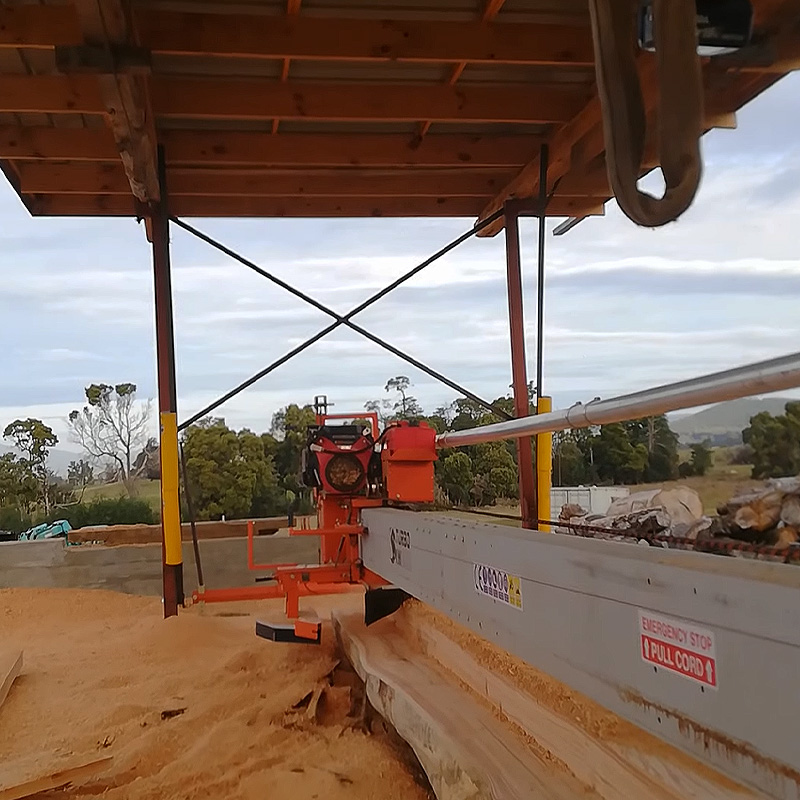
Steven Morris – M10-28A
Turbosawmill Boosts One-Man Production by 65%
“A 65% Productivity Gain with One Operator”
Steven Morris – Tasmania, Australia After seven years running a commercial timber milling business in Tasmania, Steven Morris has worked with almost every major portable sawmill system on the market. He has owned and operated band mills, a Peterson ASM automatic swing-blade mill, five Lucas mills, and now runs a Turbosawmill Warrior Automated system as the core of his in-yard operation. “I’ve operated mills with crews and as a one-man operation,” Steven explains. “That experience gives you a very clear view of what actually works in the real world.” Today, Steven operates two Lucas mills for mobile jobs and a Turbosawmill Warrior Automated mill for stationary production.Real-World Comparison of Sawmill Systems
Band Mills
Steven is direct about entry-level band mills. “The cheaper band mills are difficult to keep accurate and require constant adjustment,” he says. “To achieve consistently good results, you need a significant investment. On top of that, band replacement costs add up quickly.”Peterson ASM
The Peterson ASM, in Steven’s view, performs well when conditions are ideal—but complexity is its weakness. “It feels like a portable mill that’s been added to repeatedly in order to become automated,” he explains. “The result is a machine that can feel flimsy and requires multiple adjustments if something is knocked out of alignment.” He also notes the complexity of the electrical system. “The sizing system relies on many small motors and wiring circuits. In my opinion, it’s not truly portable and is better suited to a boutique-style operation.”Lucas Mill
Steven speaks highly of the Lucas system. “The Lucas mill is hard to fault. It’s robust, versatile, and genuinely portable. I’ve done many thousands of hours on Lucas mills.” The limitation, he says, is physical demand. “It’s not automated, so maintaining high output requires a fit operator and sustained effort.”Turbosawmill Warrior Automated
For Steven, the Turbosawmill stands apart in both design and productivity. “The Turbosawmill is by far the easiest mill to load logs onto,” he says. “The single-rail design allows the beam to move out of the way of the bearers, which makes handling large logs much simpler.” He also highlights the simplicity of the system. “It’s a much simpler design than the Peterson, yet it delivers better accuracy, higher output, and easier operation.”The result has been measurable.
“The Turbosawmill has increased our one-man production by approximately 65% compared to the Lucas.” Because of its design, Steven uses the Turbosawmill primarily in a stationary yard setup, while retaining Lucas mills for mobile on-site jobs.Beyond the Machine: System Efficiency
Steven emphasizes that productivity depends on more than the sawmill itself. “Log handling, sawdust management, and site layout are just as important as the mill,” he says. “If the setup isn’t efficient, loading logs and cleaning up can take as long as the cutting itself.”A Professional Verdict
For Steven Morris, the Turbosawmill has proven to be more than just an incremental upgrade—it represents a fundamental shift in productivity for small to mid-scale operations.By combining automation, simplicity, and structural design, the Turbosawmill has delivered a rare outcome in portable milling: significantly higher output with fewer physical demands and fewer operational complexities.
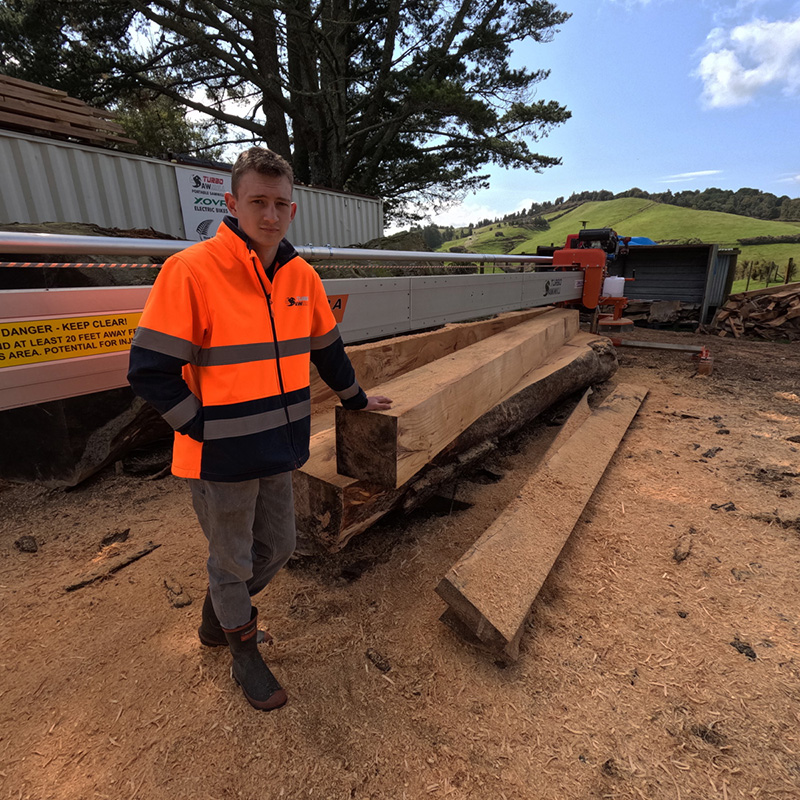
NZ Training Centre
Visit Our Turbosawmill Training & Demo Centre
Visit the Turbosawmill Training & Demonstration Center
We invite you to experience Turbosawmill technology at our dedicated Training and Demonstration Centre, where you can see our most advanced milling systems operating in real-world conditions. On site, you’ll find: Our permanently installed oscillating slabberOur largest swing-blade system to date, featuring:
- 12" cutting capacity
- Automated board return
📞 Call Jake: +64 27 370 7877 ✉️ Email: jake@turbosawmill.co.nz
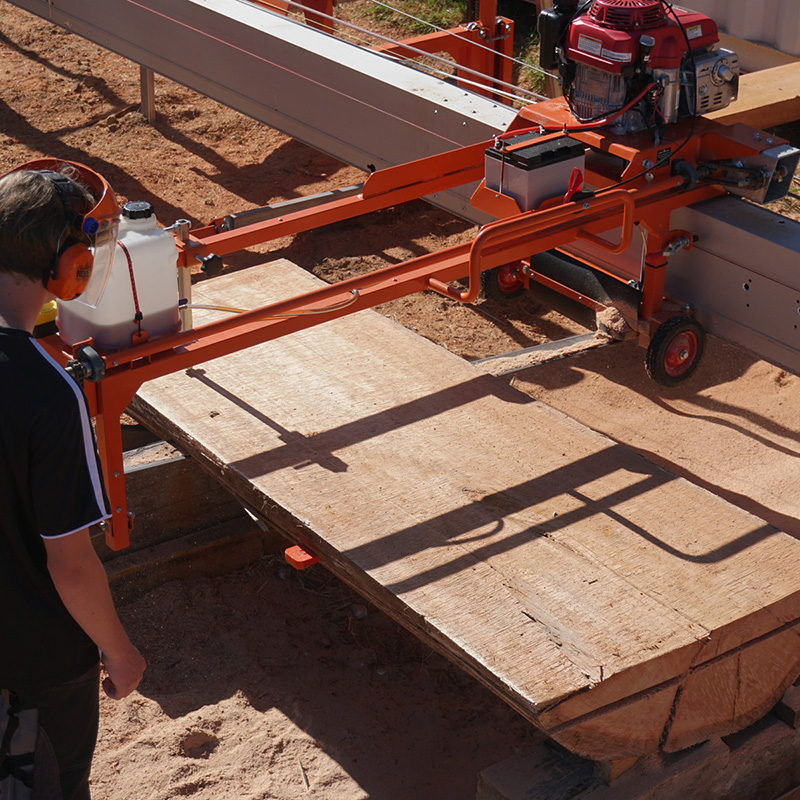
Logs to Lumber
The Jack-of-All-Trades in Timber Processing
As serrações com lâmina oscilante são, há muito tempo, um pilar da indústria madeireira.
Their simple design transforms logs into lumber quickly and safely, making them the ideal tool for producing timber for construction, furniture making, and countless other endeavors. There are many reasons to love the swing-blade sawmill in timber processing, but most of all, we love them for their versatility. Going far beyond the capabilities of other saw types, such as the bandsaw mill, swing-blade sawmills have unlocked new possibilities for the timber industry.Manuseamento flexível de troncos
One of the standout features of swing-blade sawmills is their ability to produce a variety of lumber dimensions with a single machine. Whether it is large beams, wide slabs, or standard boards, swing-blade sawmills can produce various lumber cuts, including boards, beams, and planks. Their ability to handle logs of all sizes, shapes and species makes the swing-blade sawmill even more versatile. Operators can adjust the blade position on the fly, accommodating logs with irregular shapes or varying diameters. Logs don't need to conform to standard dimensions for a swing-blade sawmill to tackle it.Corte em duas direções
Unlike other sawmills with fixed blades, the swing-blade sawmill has a movable blade that can pivot horizontally. This unique design allows operators to cut in both vertical and horizontal directions. Dual direction cutting enables operators to produce various timber styles and angles. This makes the swing-blade sawmill an ideal choice for woodworkers and artisans seeking specific patterns or features in their timber.Portabilidade e processamento no local
The swing-blade sawmill's portability takes its versatility to a new level. They can be easily transported to the location of the logs, minimising the logistical challenges of log transportation. Loggers often find themselves in remote areas where immediate milling is required, so having a tool that can cut on-site is invaluable for these kinds of projects.Fácil de configurar
Turbosawmill swing-blade sawmills are more compact than other mills, making them more accessible to moving on and off trailers and truck beds. Unlike some stationary mills that require elaborate foundations or support structures, swing-blade sawmills have fewer structural requirements. You won't need any additional construction to set up a swing-blade sawmill.Design intuitivo
Apesar das suas capacidades avançadas, as serrações com lâmina oscilante são concebidas com funcionalidades fáceis de utilizar. Os controlos intuitivos e a manutenção simples tornam estas serrações acessíveis a operadores com diferentes níveis de experiência, atraindo profissionais experientes e novatos no ramo da serração.Opções manuais e elétricas
As serrações com lâmina oscilante atendem a diferentes necessidades com as suas opções manuais e elétricas. Os modelos manuais são perfeitos para uso fora da rede, enquanto as opções elétricas oferecem maior potência e eficiência para operações em grande escala. Essa flexibilidade garante que possa encontrar uma serração que corresponda aos seus recursos disponíveis e à capacidade de produção desejada.Processo de serragem eficiente
As serrações com lâmina oscilante são conhecidas pela sua eficiência, especialmente quando comparadas com outros tipos de serrações. A capacidade de fazer cortes precisos e controlar a espessura da madeira também contribui para uma utilização mais económica do tronco. Num mundo onde a sustentabilidade está na vanguarda de muitas indústrias, a serração com lâmina oscilante minimiza o desperdício de subprodutos.Facilidade de manutenção
Turbosawmill's features make maintenance straightforward. Their key components are easy to access, making maintenance as simple as possible. We've also considered parts replacement in our design, ensuring you can keep your swing-blade sawmill in great condition. Don't fret; swing-blade sawmills are built to last, so you won't need to replace parts often. Their robust construction and high-quality blades ensure they can handle years of heavy use.Serra de lâmina oscilante: versatilidade em ação
The swing-blade sawmill's versatility and ease of use make it an ideal choice for anyone looking to transform logs into lumber. They're truly a jack-of-all-trades in the world of timber processing, making them a valuable asset for anyone from hobbyists to professional loggers. Explore the potential of this timeless timber tool and experience the satisfaction of creating high-quality lumber from any sized log in any location.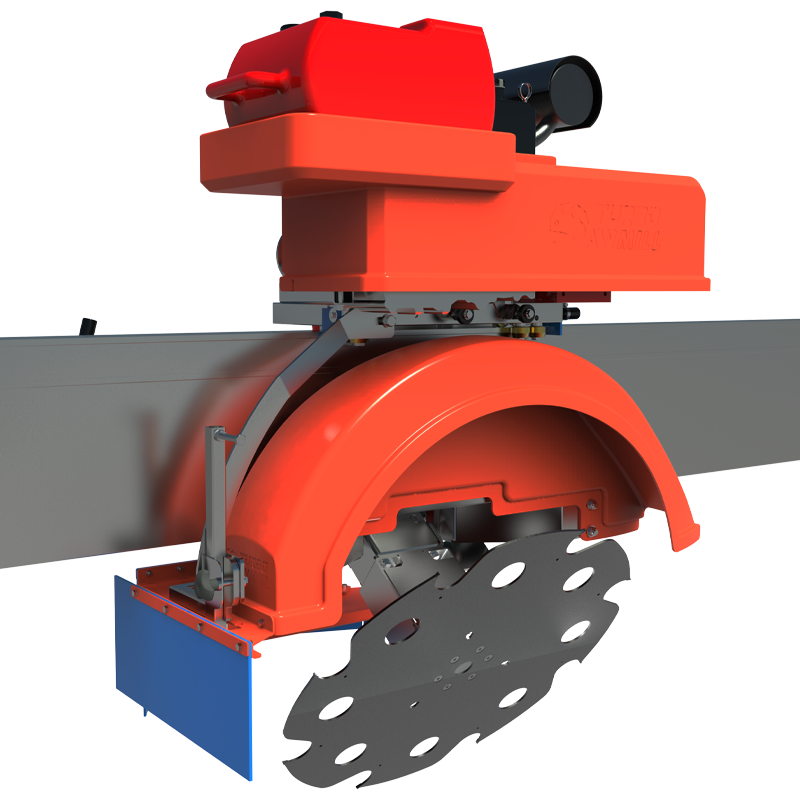
Simplify Timber Cuts
Simplify Milling with Swing-Blade Technology
Swing-Blade Sawmills: Redefining Modern Timber Processing
Timber processing has evolved rapidly over the past decade. Across the forestry and sawmilling sector, innovation has become essential—not only to increase productivity, but also to improve safety, accuracy, and operational efficiency. Among the most significant developments in portable milling has been the rise of the swing-blade sawmill. Once considered a niche alternative, swing-blade technology has steadily reshaped how timber is processed. By combining mechanical simplicity with cutting versatility, swing-blade systems have reduced complexity, minimised manual handling, and delivered greater control over finished timber production. As a result, swing-blade sawmills are increasingly being adopted across a wide spectrum of operations—from landowners and custom woodworkers to commercial milling enterprises.Reduced Log Handling and Improved Yield
A defining characteristic of swing-blade sawmills is their ability to pivot the circular blade through 90 degrees, enabling both vertical and horizontal cuts without repositioning the log. This capability fundamentally changes the milling workflow. Traditional band mills often require logs to be rotated, repositioned, or heavily manipulated to achieve dimensional cuts. Swing-blade systems, by contrast, allow operators to work directly within the log’s natural geometry.The outcome is twofold:
- Reduced physical handling of heavy logs
- Improved timber recovery and reduced waste
Operational Simplicity
Another key advantage of swing-blade technology lies in its mechanical and operational simplicity. Unlike many band mills, which can require extensive setup, frequent blade changes, and precise tensioning, swing-blade systems are typically intuitive to operate. Basic training is often sufficient for operators to achieve accurate, repeatable results. The cutting process itself is straightforward. Operators can transition between vertical and horizontal cuts without complex adjustments, allowing for faster workflow and fewer interruptions. For many operators, this simplicity translates directly into higher productivity and lower operating costs.Maximizing Timber Recovery
Swing-blade sawmills offer a flexible approach to cutting that adapts to the log rather than forcing the log to fit a fixed cutting pattern. This adaptability is particularly valuable when processing irregular, stressed, or oversized logs—situations where traditional systems often generate excessive waste or require compromise in cut quality. By maintaining continuous cutting paths and minimizing repositioning, swing-blade mills extract more usable timber from each log, even in challenging conditions.Versatility in Cutting Methods
The ability to cut in multiple planes makes swing-blade sawmills uniquely versatile. From slabbing and quarter sawing to structural timber production and custom dimensions, swing-blade systems can accommodate a broad range of cutting requirements within a single platform. This versatility reduces the need for multiple machines or secondary processing stages, enabling operators to respond quickly to diverse project demands.On-Site Processing and Portability
Portability has long been a defining feature of swing-blade sawmills, but its significance has grown as logistics costs and environmental considerations have increased.By bringing the mill directly to the log, operators can:
- Reduce transportation costs
- Minimize environmental impact
- Process timber in remote or difficult terrain